Why Phone Batteries Age: Heat, Voltage, and Cycle Wear
Phone batteries age because charging is never perfectly reversible. In a healthy cell, lithium ions shuttle cleanly between two electrodes. Every trip causes tiny side reactions
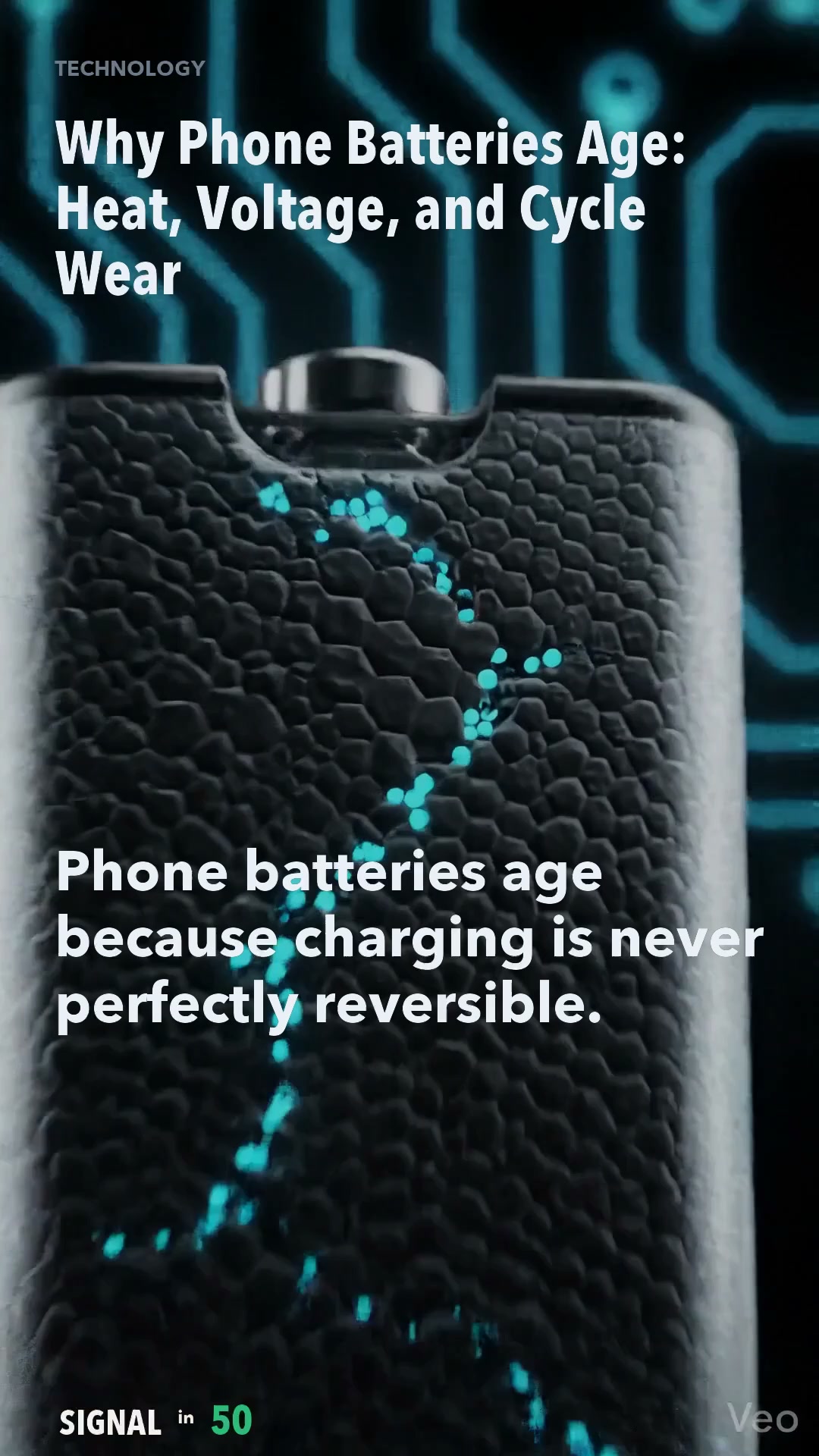
Phone batteries age because charging is never perfectly reversible. In a healthy cell, lithium ions shuttle cleanly between two electrodes. Every trip causes tiny side reactions, and those reactions accelerate when the battery is hot or sitting near full charge, where voltage stress is highest.
That stress grows unwanted chemical layers and deposits inside the cell. Some lithium gets trapped and stops carrying energy. Some active material becomes less available.
As the damage accumulates over many cycles, internal resistance rises. Now the battery not only holds less charge, it also struggles to deliver power quickly. That is why an older phone can drop faster, heat up more easily, or feel sluggish when brightness, gaming, navigation, or other peak loads hit.
The practical takeaway is simple: battery aging is driven mostly by heat, high voltage, and repeated cycling. You cannot stop it, but you can slow it by avoiding unnecessary heat and not leaving the battery parked at full charge for long periods. Less stress means better runtime for longer.
Key facts
- Phone batteries degrade because repeated charging.
- Long periods at high charge trigger side reactions that slowly reduce capacity and raise resistance.
- Strong practical and recent demand: TED-Ed ~730K and a recent fast-charging/battery-wear video ~4.1M in four months.
- The draft is useful and mechanism-centered.
- Avoiding myth-chasing by focusing on heat.
Why it matters
Slightly higher ambiguity than pure fundamentals. Still safely above threshold if claims stay conservative and avoid overspecific charging prescriptions.
The Signal Brief
One sourced idea worth your attention, in your inbox. No noise.