How Data Travels Through the Internet
Nothing you send online ever arrives intact. Every photo, video, or message is instantly shattered into thousands of tiny, numbered chunks called packets. Each carries a destination stamp, but never the full picture.
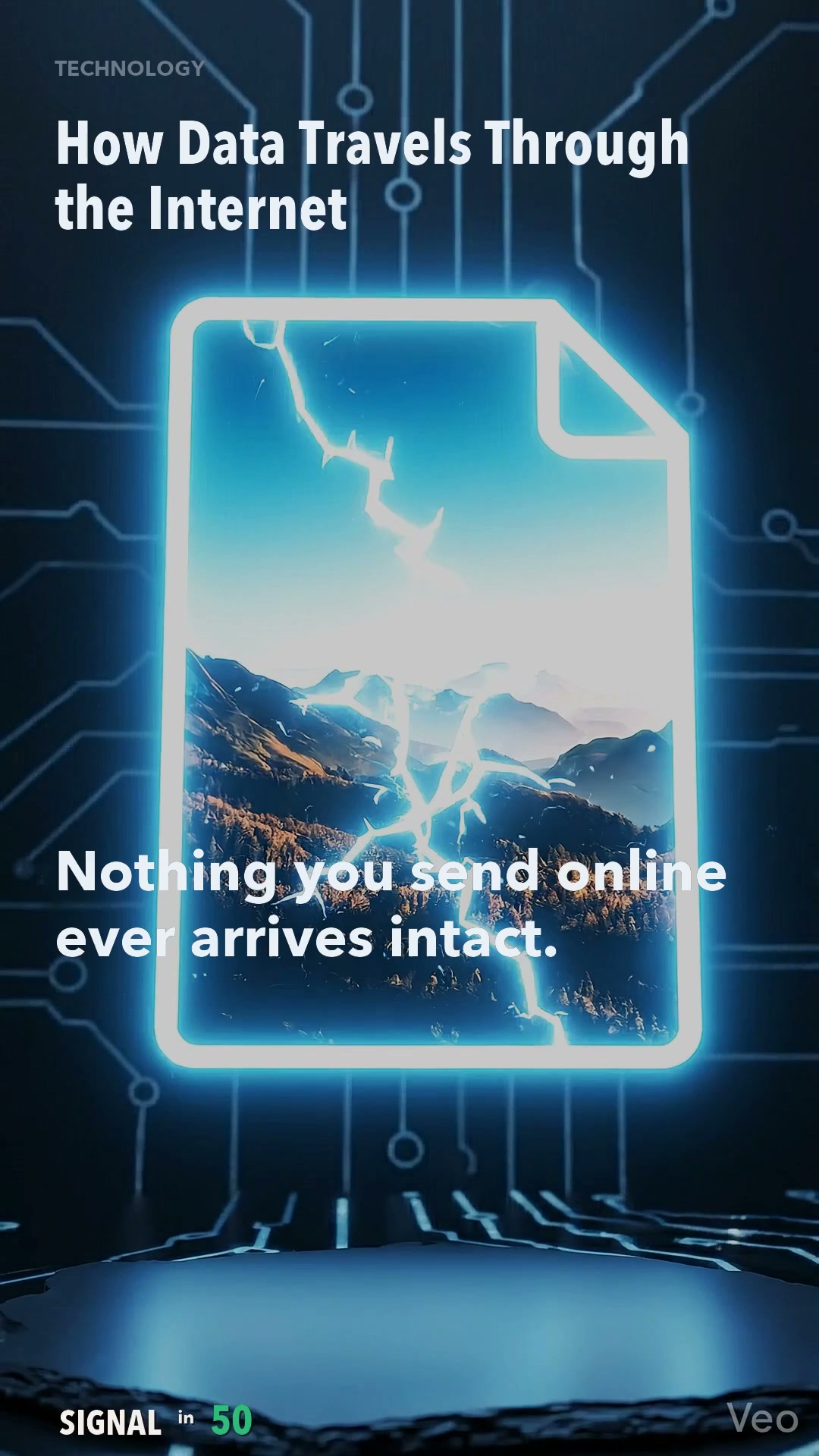
Every file you send gets sliced into small numbered chunks called packets. Each packet carries a data fragment plus a header stamped with its origin, destination, and sequence number. No single packet holds the complete message.
These packets launch independently into a mesh of routers spread across cities and continents. Each router reads the destination and forwards the packet along the fastest available link. Two packets from the same file can take entirely different routes and still arrive at the same endpoint.
When a cable breaks or a router overloads, packets reroute in milliseconds. No central controller picks the detour. Each router recalculates the next best hop on its own using real-time forwarding tables, so delivery continues without the sender ever knowing.
At the destination, the receiving device checks every sequence number and snaps the packets back into order. Missing or corrupted fragments trigger an automatic retransmit request. Within moments the original page, video, or message is whole again, assembled from pieces that each crossed a different path.
Key facts
- Internet data is chopped into packets.
- Routed independently across many machines.
- Then reassembled at the destination so networks stay flexible and resilient.
- Classic evergreen topic with strong support from Code.org.
- Practical Networking.
Why it matters
Broad internet explainers. Including videos with million-plus validation.
The Signal Brief
One sourced idea worth your attention, in your inbox. No noise.