The Hidden Mechanism Behind The Thermohaline Circulation
Here is the surprise: the ocean is not driven mainly by wind. Thermohaline circulation uses tiny density differences to move heat northward, drop surface water into the deep, and keep it traveling for centuries. The trick is density.
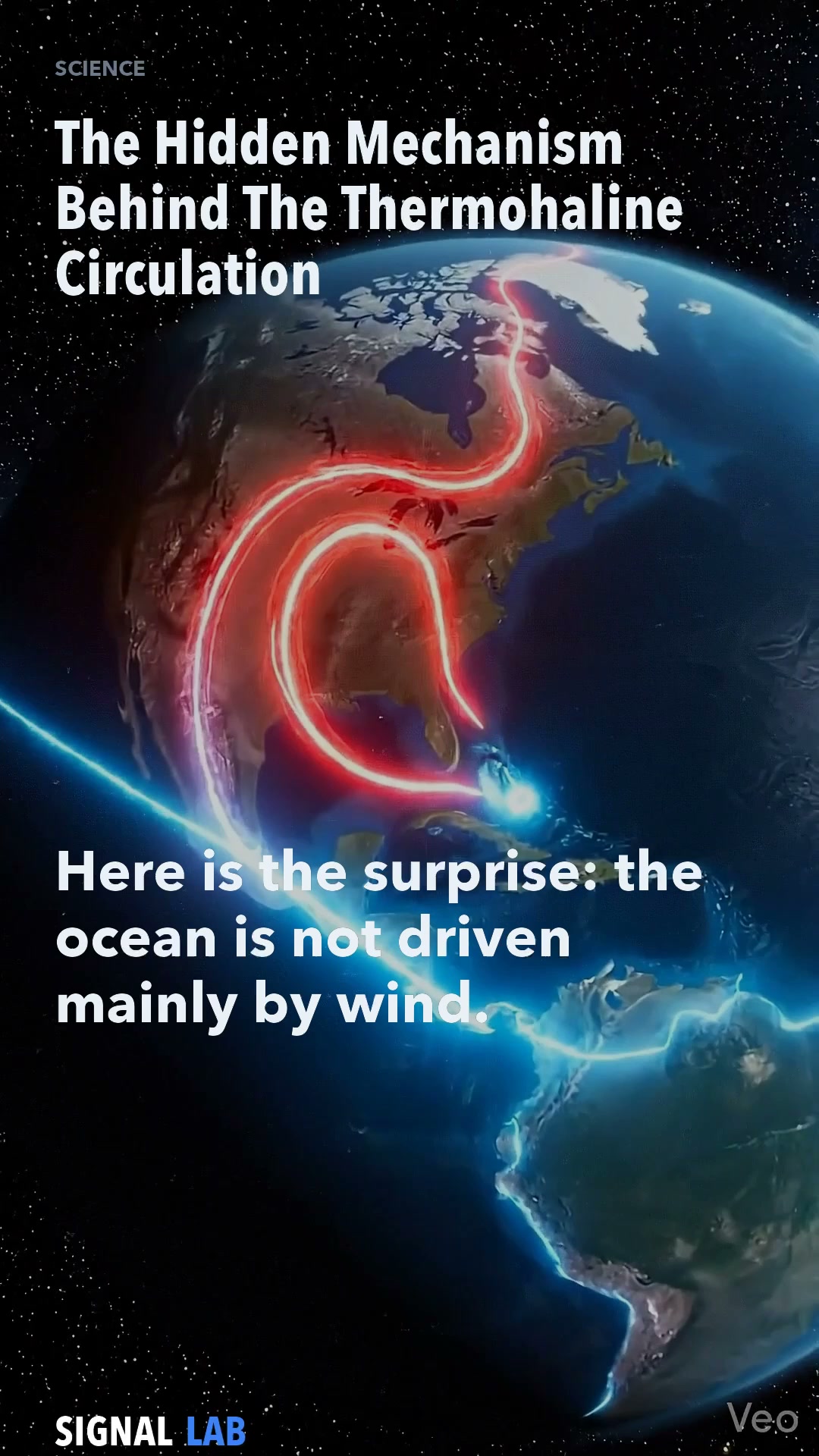
Here is the surprise: the ocean is not driven mainly by wind. Thermohaline circulation uses tiny density differences to move heat northward, drop surface water into the deep, and keep it traveling for centuries.
The trick is density. Cold seawater is heavier than warm seawater, and salty water is heavier than fresher water. Those tiny differences sound weak, but across whole oceans they become the system's fuel.
But the ocean resists mixing. Deep flow starts only when surface water gets dense enough to punch through the layer below. In the North Atlantic, cooling, evaporation, and sea-ice formation can push water past that threshold.
That is why this current matters. Warm water carries heat north near the surface, while cold dense water returns below for centuries. Once you see density and gravity running the loop, the ocean stops looking passive.
Key facts
- The ocean does not just drift under the wind.
- Deep below the waves.
- It runs a planet-scale heat engine that can move warmth northward.
- Send surface water into the abyss.
- And keep that water in motion for more than a thousand years.
Why it matters
So what force can drive something this vast, this slow, and this persistent? Surface currents are easy to picture because wind shoves them along.
The Signal Brief
One sourced idea worth your attention, in your inbox. No noise.