The Hidden Mechanism Behind The Coriolis Effect
Wild fact: storms spin opposite ways. The Coriolis effect explains it. On one rotating Earth, moving air seems to bend right in the north and left in the south.
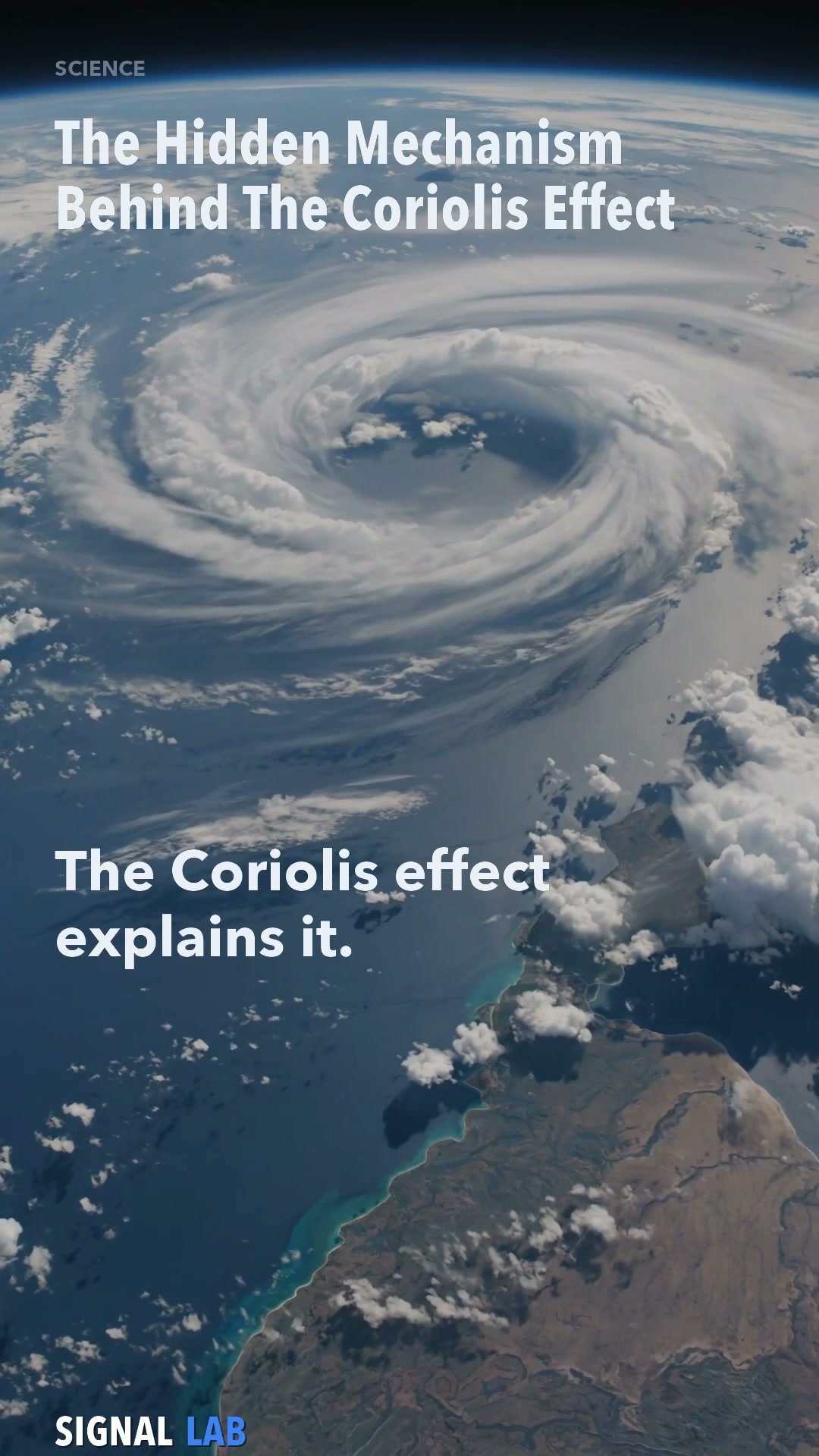
Wild fact: storms spin opposite ways. The Coriolis effect explains it. On one rotating Earth, moving air seems to bend right in the north and left in the south. The mystery is really the curve.
Here is the hidden setup. Air never moves over still ground. Earth rotates, and the equator has farther to travel each day than higher latitudes, so the surface there moves east faster.
Now move air north from the equator. It keeps that faster eastward motion. Over slower-moving ground, it outruns the surface below, so from Earth it appears to turn right. In the south, the same mismatch flips left.
That is why trade winds slant and giant storms organize into opposite spirals. The Coriolis effect is straight-line inertia viewed from a rotating planet. Once you see that, big weather stops looking random and starts looking mechanical.
Key facts
- A 12-scene documentary that opens on the visible mystery of opposite storm spin.
- Then explains the Coriolis effect as inertia viewed from a rotating Earth.
- The narration moves step by step from Earth’s changing eastward speed by latitude.
- To air carrying that motion across the globe.
- To the bending of trade winds and the opposite spin of cyclonic storms.
Why it matters
It ends with the practical payoff: large-scale weather stops looking arbitrary once the atmosphere is understood as moving over a rotating sphere. From space, the pattern looks almost too neat to be accidental.
The Signal Brief
One sourced idea worth your attention, in your inbox. No noise.