How Your Immune System Recognizes Invaders
Can your immune system stop invaders before you notice? Skin and mucus do more than shield: they trap, dissolve, and damage microbes with acids, enzymes, and salts. Most invaders die at the gate before touching cells.
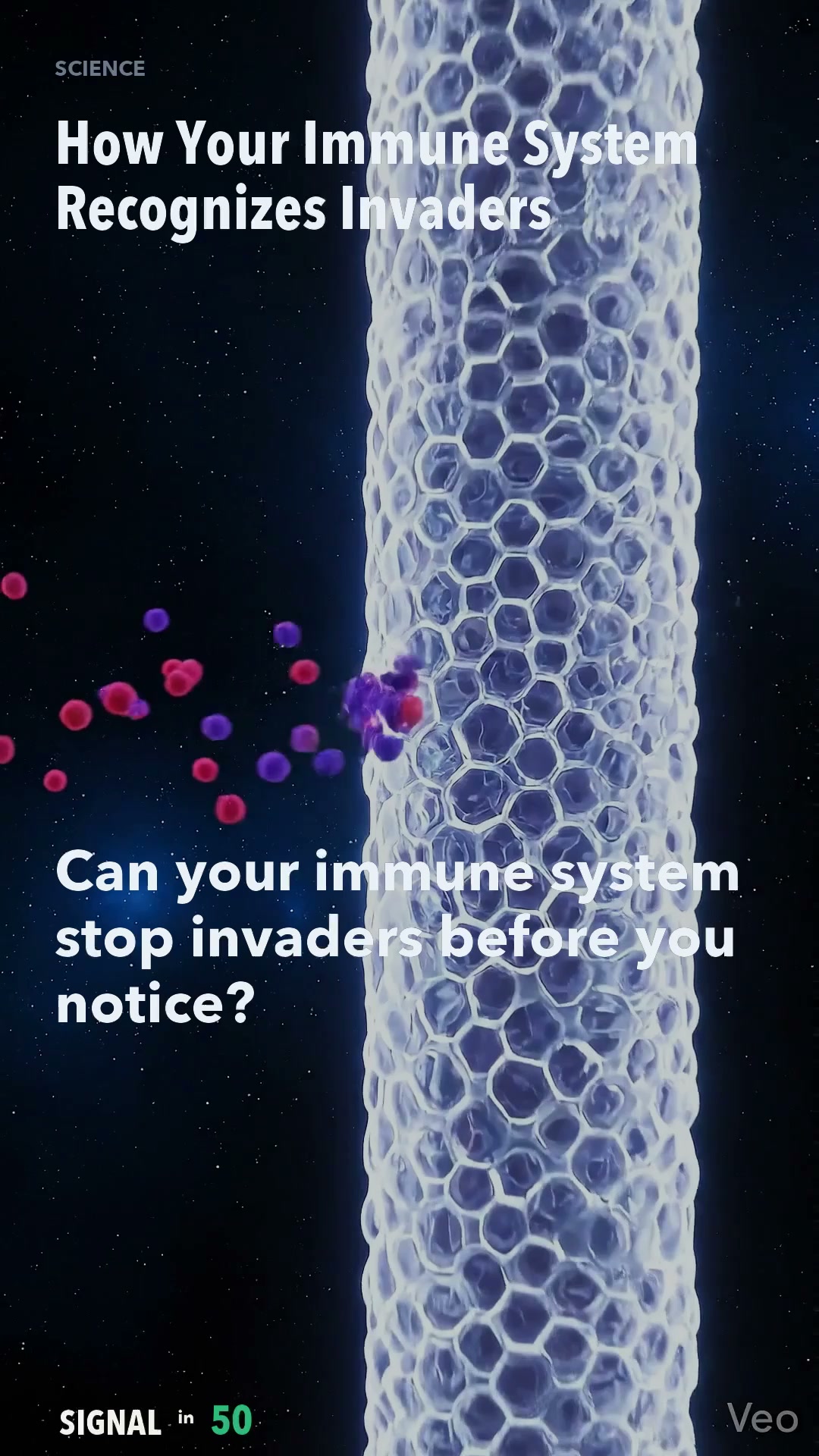
Your immune system recognizes invaders by moving through layers. First, skin, mucus, and other barriers try to stop germs before infection starts. If a pathogen slips through, the body treats that breach as danger and begins a defense sequence immediately.
The first internal response is innate immunity. Fast-moving cells attack anything that looks suspicious, release alarm signals, and trigger inflammation. That broad response does not need to know the exact germ yet; its job is to slow the spread, contain damage, and call in backup.
Adaptive immunity takes over with precision. B cells and T cells recognize a specific antigen, so the response locks onto the exact invader. Antibodies can bind targets for removal, while killer T cells destroy infected cells.
That is why a second encounter is usually faster and more effective. The body is not starting from zero anymore; it already has a biological reference file. The big idea is simple: block first, react fast, identify precisely, then remember.
Key facts
- A layered biology explainer that organizes immunity into a simple sequence: barriers block entry.
- Innate defenses react fast.
- Adaptive cells identify specifics.
- Memory cells make future responses faster.
- Durable health-literacy interest with Science ABC at 3.3M and Zero To Finals at 2.2M.
Why it matters
Plus multiple videos on innate versus adaptive immunity. The cleanest editorial structure is layered recognition: barriers, innate pattern detection, adaptive specificity, and memory.
The Signal Brief
One sourced idea worth your attention, in your inbox. No noise.