Tempered Glass: Why It Shatters Into Cubes, Not Daggers
Tempered glass doesn't shatter randomly. During manufacturing, the outer surface cools rapidly while the interior stays hot. This locks the surface into compression and traps the core under tension.
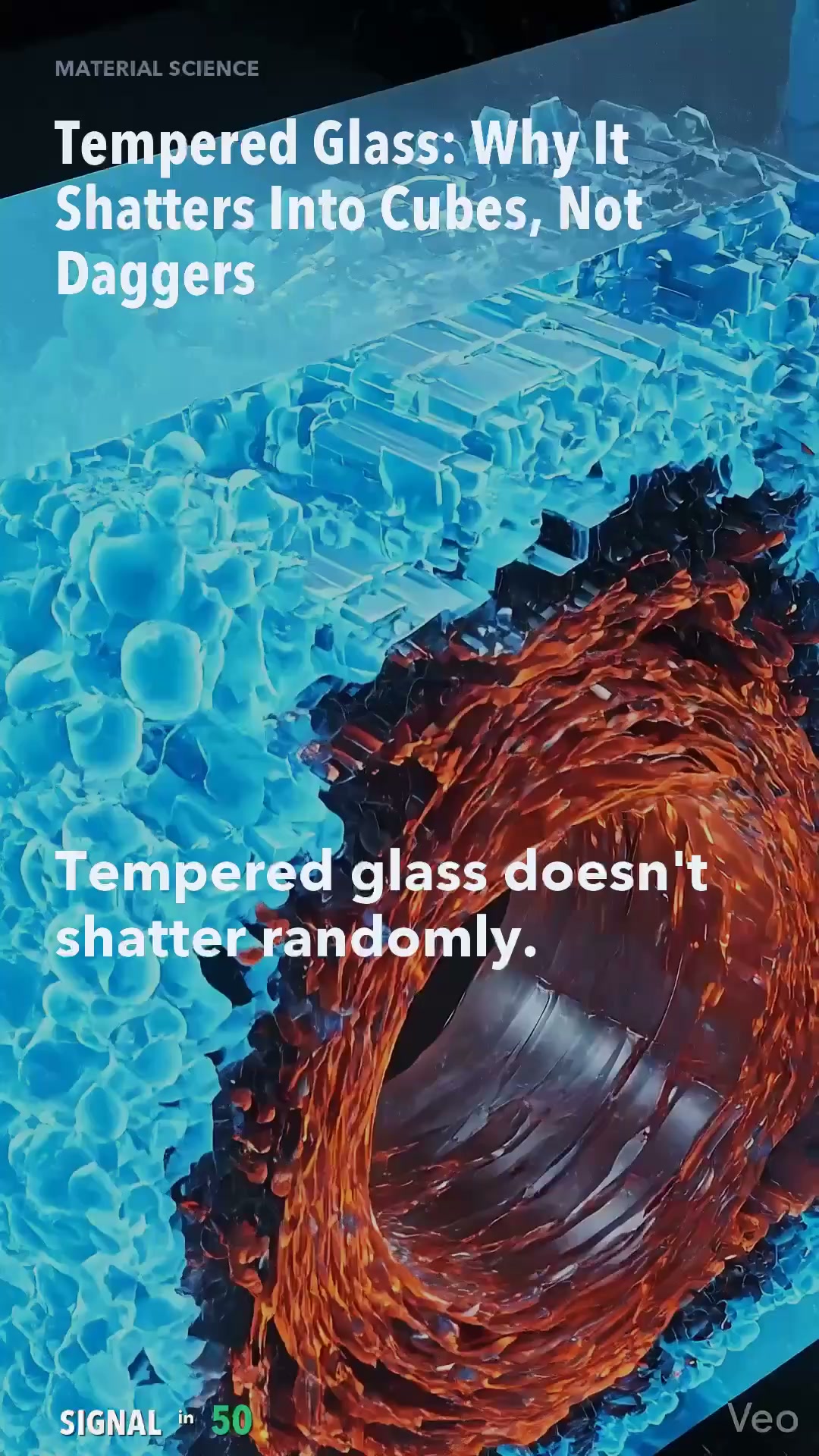
Tempered glass doesn't shatter randomly. During manufacturing, the outer surface cools rapidly while the interior stays hot. This locks the surface into compression and traps the core under tension. The result is a sheet holding enormous elastic energy in perfect balance.
That balance is the key. The compressed outer layer acts like armor, making tempered glass four times stronger than ordinary annealed glass. This strength has a condition. Compression only works while the surface stays intact. One deep crack changes everything.
When a crack penetrates the surface and reaches the tensioned core, stored energy releases all at once. The fracture doesn't spread slowly. It races through the entire sheet at over a mile per second, splitting the glass into thousands of small cube-shaped fragments.
Those cubes are the point. Ordinary glass produces long blade-like shards that slice deep. Tempered glass is engineered not to resist breaking but to break safely — controlled destruction replacing dangerous collapse.
Key facts
- Rapid surface cooling locks tempered glass's outer layer in compression while the core remains in tension.
- Rapid surface cooling locks tempered glass's outer layer in compression.
- The core remains in tension.
- Stored elastic energy fragments the entire sheet into small blunt cubes.
- Engineered failure.
Why it matters
Not prevented failure. Will Massey's shower door video hit 16.5M views — massive organic curiosity.
The Signal Brief
One sourced idea worth your attention, in your inbox. No noise.