Why Dorian Gray turns beauty into a trap
Wait, Dorian Gray is not about vanity. It asks a nastier question. What if beauty never had to pay?
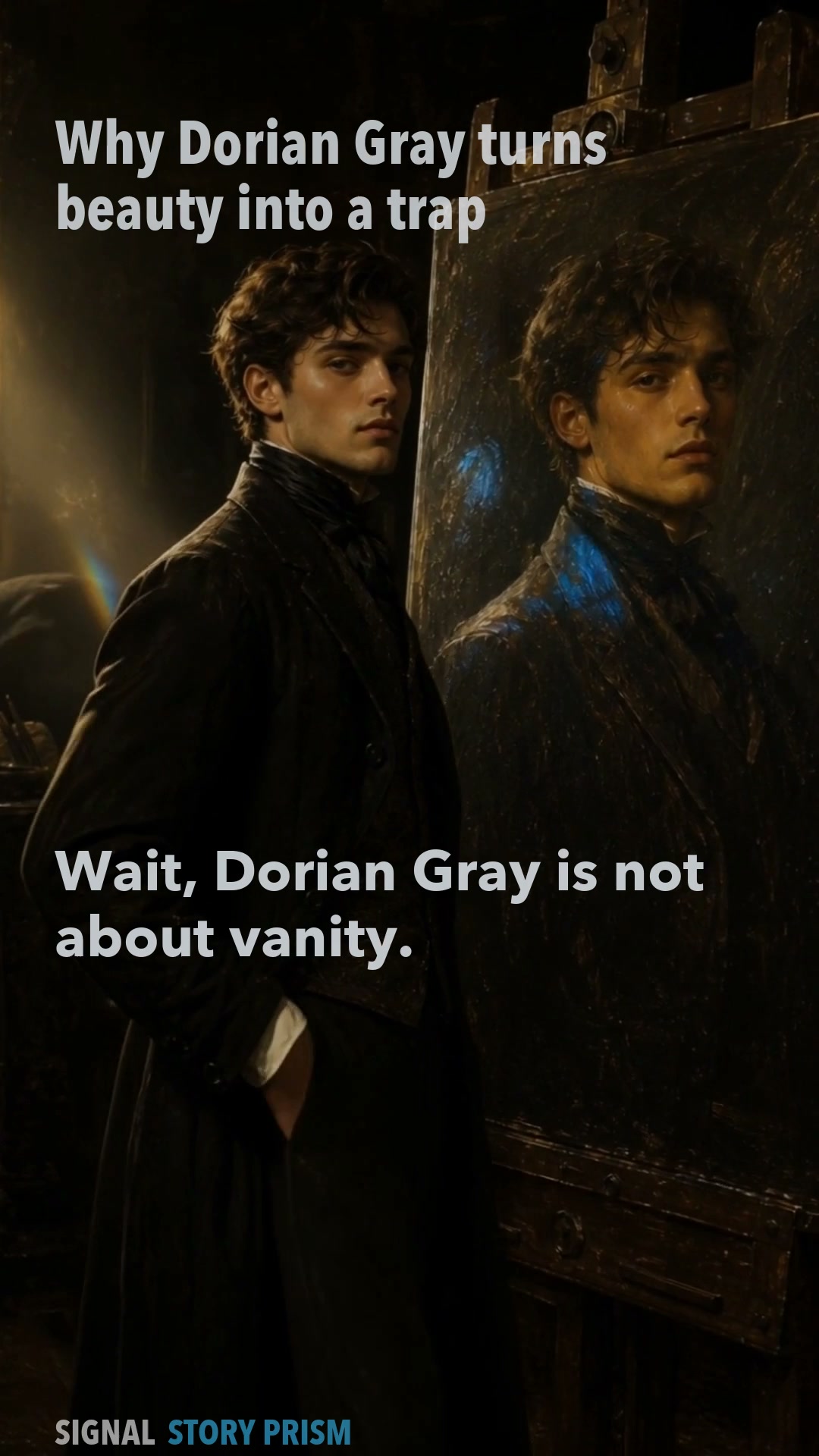
Wait, Dorian Gray is not about vanity. It asks a nastier question.
What if beauty never had to pay? He sees his portrait, wishes it would age instead, and his own face becomes perfect camouflage.
But the wish does not erase consequence. It moves it.
The portrait becomes his hidden moral body, locked away in the attic, and every cruelty etches the painted face while his skin stays smooth. That is the real trap.
Once no scar reaches his body, appearance splits from identity. Beauty without consequence stops being freedom.
It becomes exile from accountability, a life where the true self can rot unseen. So when he stabs the portrait, he attacks the only place truth still lives.
The hidden face returns, and it destroys him. Wilde's warning feels modern: beauty becomes lethal the moment it stops answering for us.
The Signal Brief
One sourced idea worth your attention, in your inbox. No noise.