Why the Battle of Midway changed the Pacific War
At Midway, the Pacific War turned on a strange vulnerability: aircraft carriers were powerful only while their decks stayed organized. Fuel hoses, bombs, torpedoes, and waiting planes made a floating airfield dangerously alive. The American codebreakers did not sink the fleet themselves, but they gave pilots the rarest weapon in naval war: timing. They knew where the Japanese carriers had to be. When dive-bombers arrived, minutes mattered more than armor. Japanese decks were rearming aircraft, f
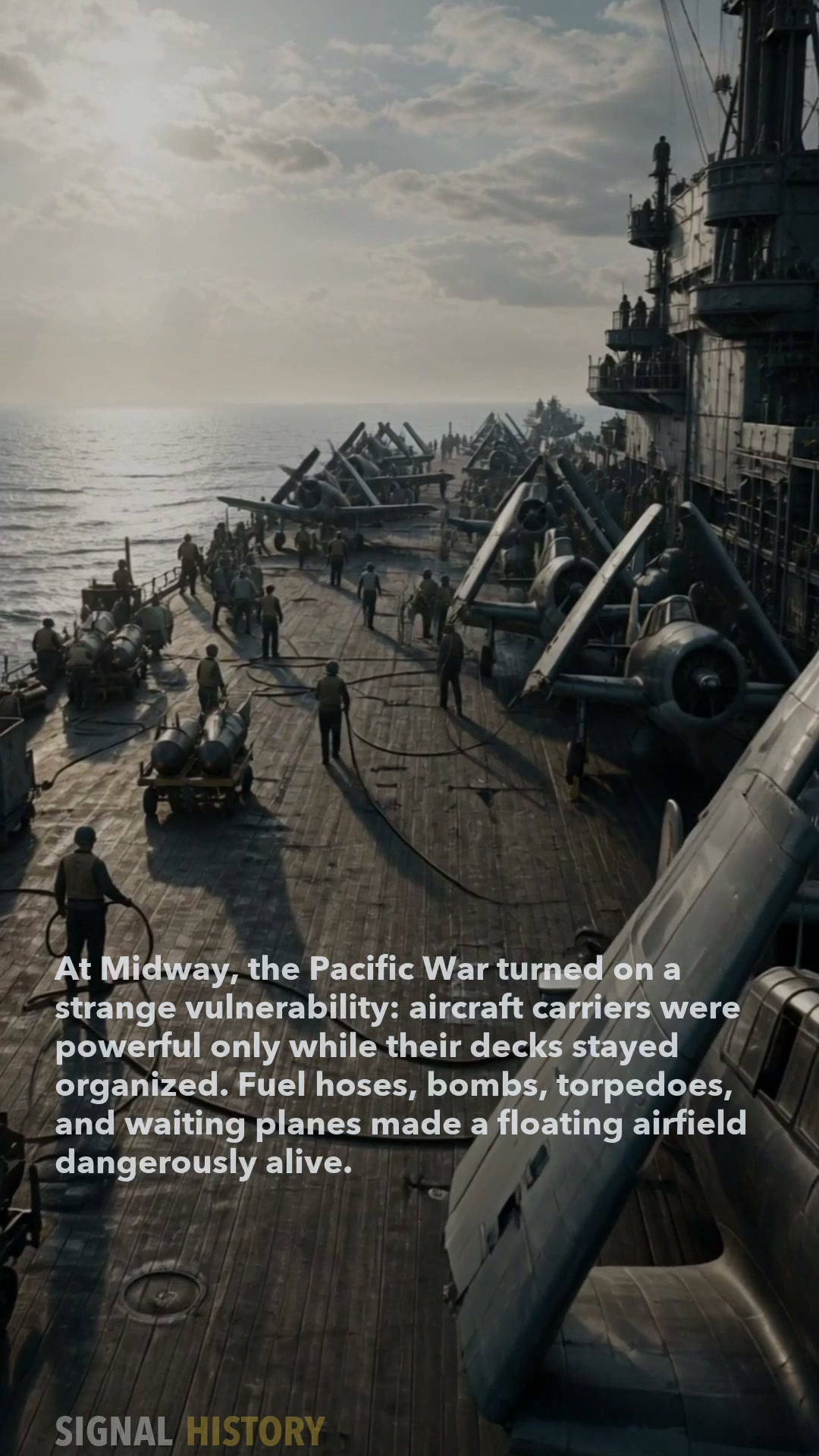
At Midway, the Pacific War turned on a strange vulnerability: aircraft carriers were powerful only while their decks stayed organized. Fuel hoses, bombs, torpedoes, and waiting planes made a floating airfield dangerously alive.
The American codebreakers did not sink the fleet themselves, but they gave pilots the rarest weapon in naval war: timing. They knew where the Japanese carriers had to be.
When dive-bombers arrived, minutes mattered more than armor. Japanese decks were rearming aircraft, fighters were low, and one clean angle from above turned preparation into fire.
Midway matters because empires can lose balance before they lose strength. The battle was not just courage. It was information finding the exact second when power was exposed.
Key facts
- American codebreaking helped locate the Japanese carrier force before the Battle of Midway.
- Carrier deck operations during rearming and refueling could create severe vulnerability.
- U.S. dive-bombers struck Japanese carriers during a narrow timing window on June 4, 1942.
- At Midway, timing and deck state mattered as much as raw fleet strength.
- The battle shifted the strategic initiative in the Pacific War toward the United States.
Why it matters
Midway is a lesson in how information can find the instant when a powerful system becomes fragile.
The Signal Brief
One sourced idea worth your attention, in your inbox. No noise.