What the Battle of Midway changed
In June 1942, six months after Pearl Harbor, Japan's navy controlled the Pacific. Admiral Yamamoto sent four carriers to capture Midway Atoll — an island barely two miles wide. But American codebreakers had cracked Japan's naval cipher, JN-25.
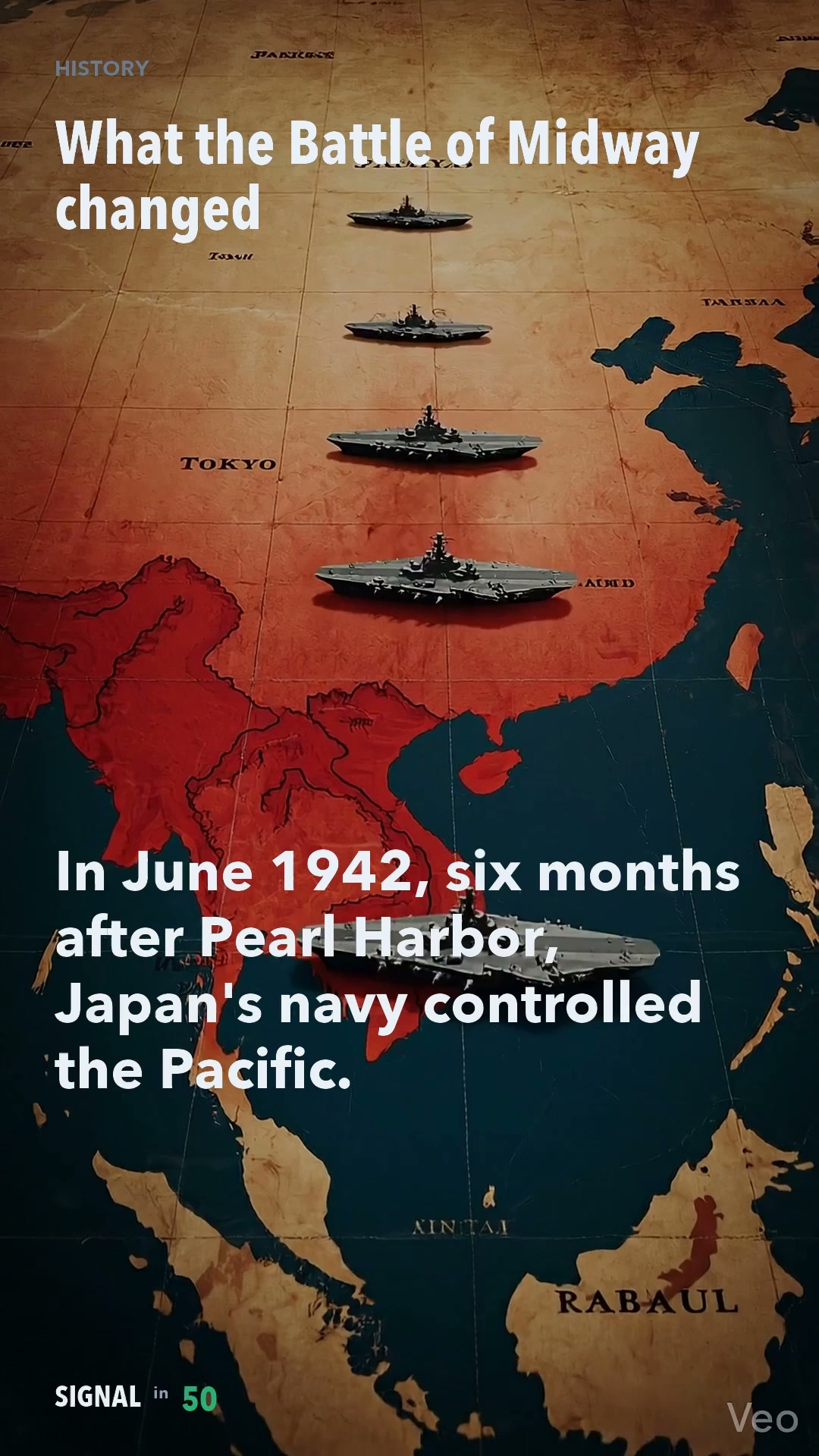
Six months after Pearl Harbor, Japan sent four fleet carriers to seize Midway Atoll and lure America's surviving fleet into a decisive battle. Admiral Yamamoto expected to finish what Pearl Harbor started. He did not know his codes were already broken.
Commander Joseph Rochefort's codebreaking team at Station Hypo cracked enough of the JN-25 cipher to identify both the target and the date. Admiral Nimitz positioned three carriers northeast of Midway in a silent ambush, turning Japan's trap completely around.
On June 4, 1942, Japanese flight decks were packed with fueled aircraft and live ordnance mid-rearm when American dive bombers struck from above. Within five minutes, three carriers were engulfed in chain explosions. A fourth sank by evening.
Those four carriers were the core of Japan's naval striking power. Losing them ended six months of offensive dominance and permanently shifted control of the Pacific to the United States. After Midway, Japan never launched another major offensive.
Key facts
- Destroyed four Japanese fleet carriers and ended Japan's offensive dominance in the Pacific.
- Shifting the strategic initiative permanently to the United States.
- American codebreakers under Commander Joseph Rochefort deciphered Japanese Navy communications and identified Midway Atoll as the target.
- Allowing Admiral Chester Nimitz to position three carriers in an ambush that caught the Japanese flight decks while they were rearming aircraft.
- Allowing Admiral Chester Nimitz to position three carriers in an ambush that caught the Japanese flight decks.
Why it matters
They were rearming aircraft. Six months after Pearl Harbor, Japan planned to lure the remaining U.S.
The Signal Brief
One sourced idea worth your attention, in your inbox. No noise.