The Turning Point Behind Gaugamela 331 BCE
Why win by moving sideways? At Gaugamela in 331 BCE, Alexander's smaller army slides right across a dusty plain while Persia spreads wider. The battle starts turning before the famous charge even begins.
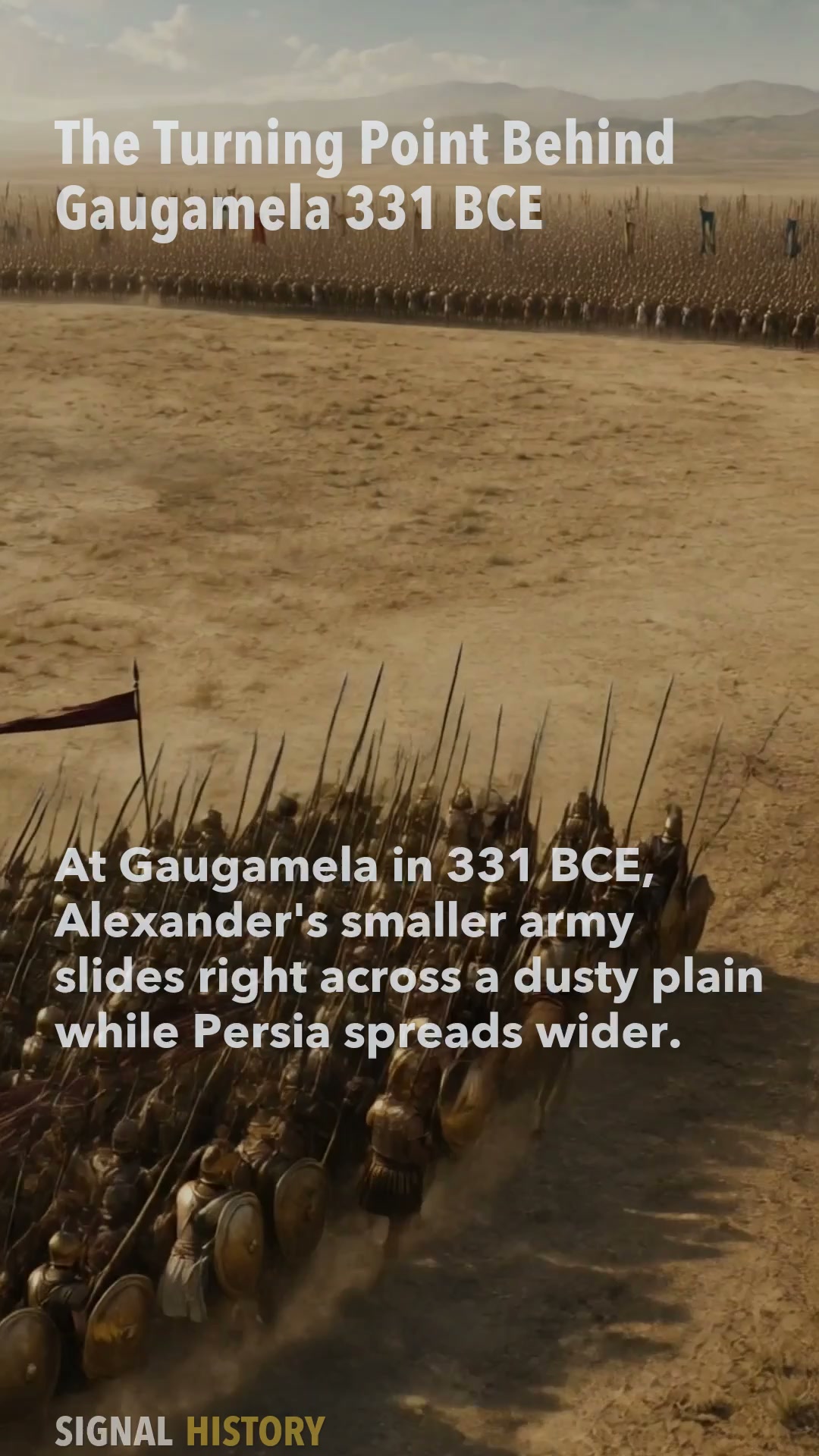
Why win by moving sideways? At Gaugamela in 331 BCE, Alexander's smaller army slides right across a dusty plain while Persia spreads wider. The battle starts turning before the famous charge even begins.
That huge width looked deadly. A straight attack let Persia wrap both flanks. But size carries friction. The wider the line stretched, the harder it became to keep aligned, quick, and under control.
So Alexander keeps drifting right. Persia has to follow or risk being outflanked. Its giant line bends, stretches, and thins. Near the center, a narrow seam appears. He is creating the only target he needs.
Then the Companion Cavalry punches through that seam and lunges toward Darius. Alexander never needed to crush every soldier. He only needed one place where numbers stopped behaving like strength. That is Gaugamela's lesson.
Key facts
- At Gaugamela in 331 BCE, the decisive move begins before the famous charge.
- Across a wide dusty plain.
- A smaller Macedonian army slides sideways while a vast Persian line stretches far beyond it.
- A smaller Macedonian army slides sideways.
- A vast Persian line stretches far beyond it.
Why it matters
The mystery of the battle starts here: how does the outnumbered force create the opening it needs to survive. At first glance, the Persians seem to hold every advantage.
The Signal Brief
One sourced idea worth your attention, in your inbox. No noise.