The Spanish Armada: The Tech Gap That Sunk an Empire
The Spanish Armada looked unbeatable in 1588, but the campaign turned on ship design, range, formation, and a broken rendezvous that weather made fatal.
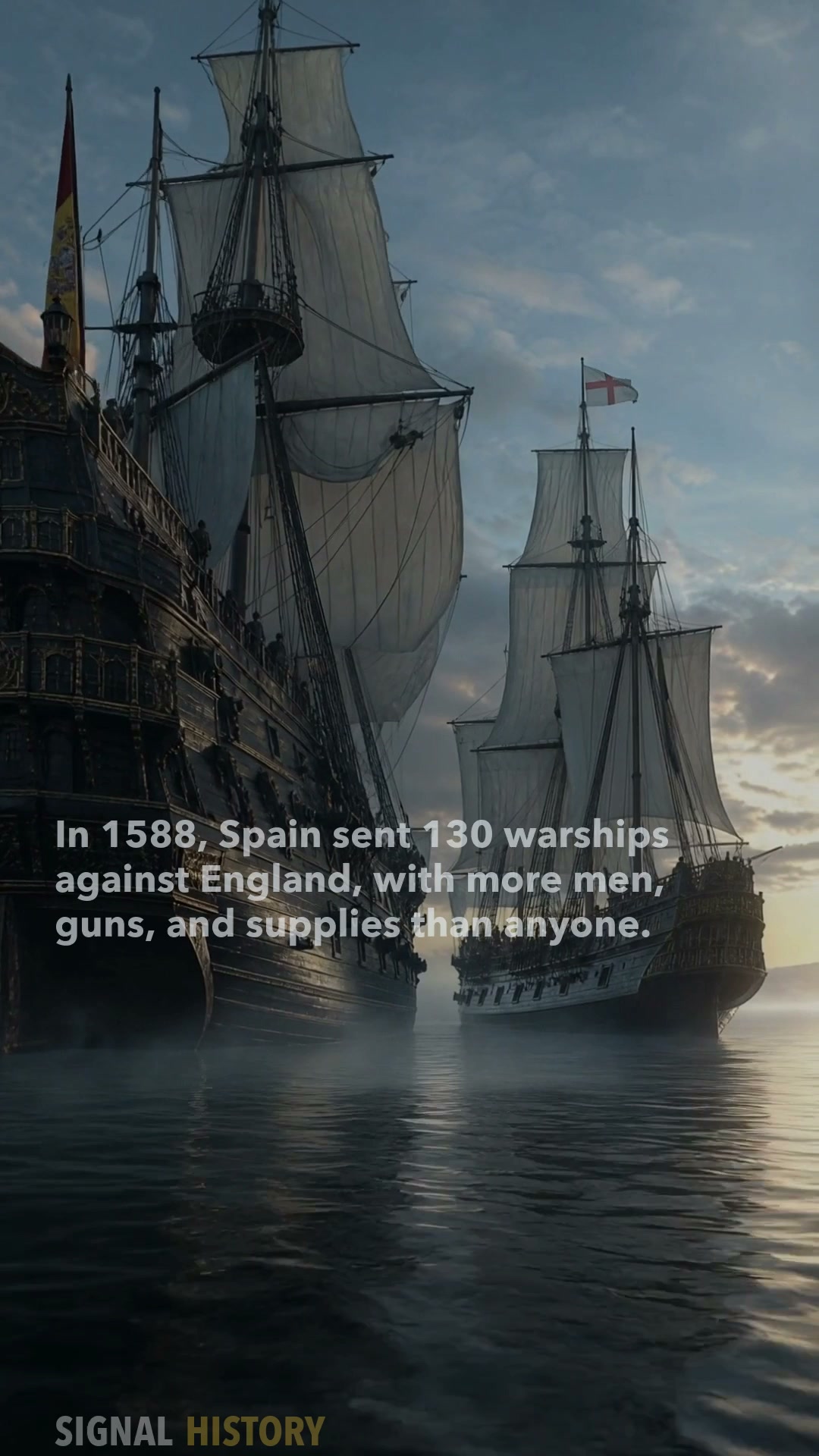
How did the Spanish Armada lose? In 1588, Spain sent 130 warships against England, with more men, guns, and supplies than anyone. The catch was design: its huge ships were built to board.
England built lower, faster race-built galleons with long-range cannon. Instead of closing in, they stayed away and kept firing. Then at Calais, fireships drifted into the anchored crescent.
That was the trap. Once scattered, the Armada could not regroup, and fierce North Sea storms blocked the Channel route home. The fleet was pushed north around Scotland and Ireland.
Meanwhile, Parma's invasion army waited in the Netherlands and never linked up. Spain lost roughly half its ships and thousands of sailors. The Armada failed because size was not enough.
Key facts
- How English ship design and fire-tactics—aided by weather—defeated the largest fleet in the world.
- Strong interest in naval history.
- High performance for tactical maps and the 'modern ship vs historical fleet' thought experiments.
- Spain had more ships, more men, and more guns.
- England had maneuverability and the 'Protestant Wind.'.
Why it matters
Comparison diagram of a Spanish Galleon (high castle, slow) vs. An English Race-Built Galleon (low, fast).
The Signal Brief
One sourced idea worth your attention, in your inbox. No noise.