The Secret Flaw of the Citigroup Center
A skyscraper almost killed Manhattan. Citigroup Center looked brilliant in 1977, lifted on giant mid-side stilts so a church could survive beneath it. That elegant compromise created the mystery: why did one phone call suddenly terrify its engineer?
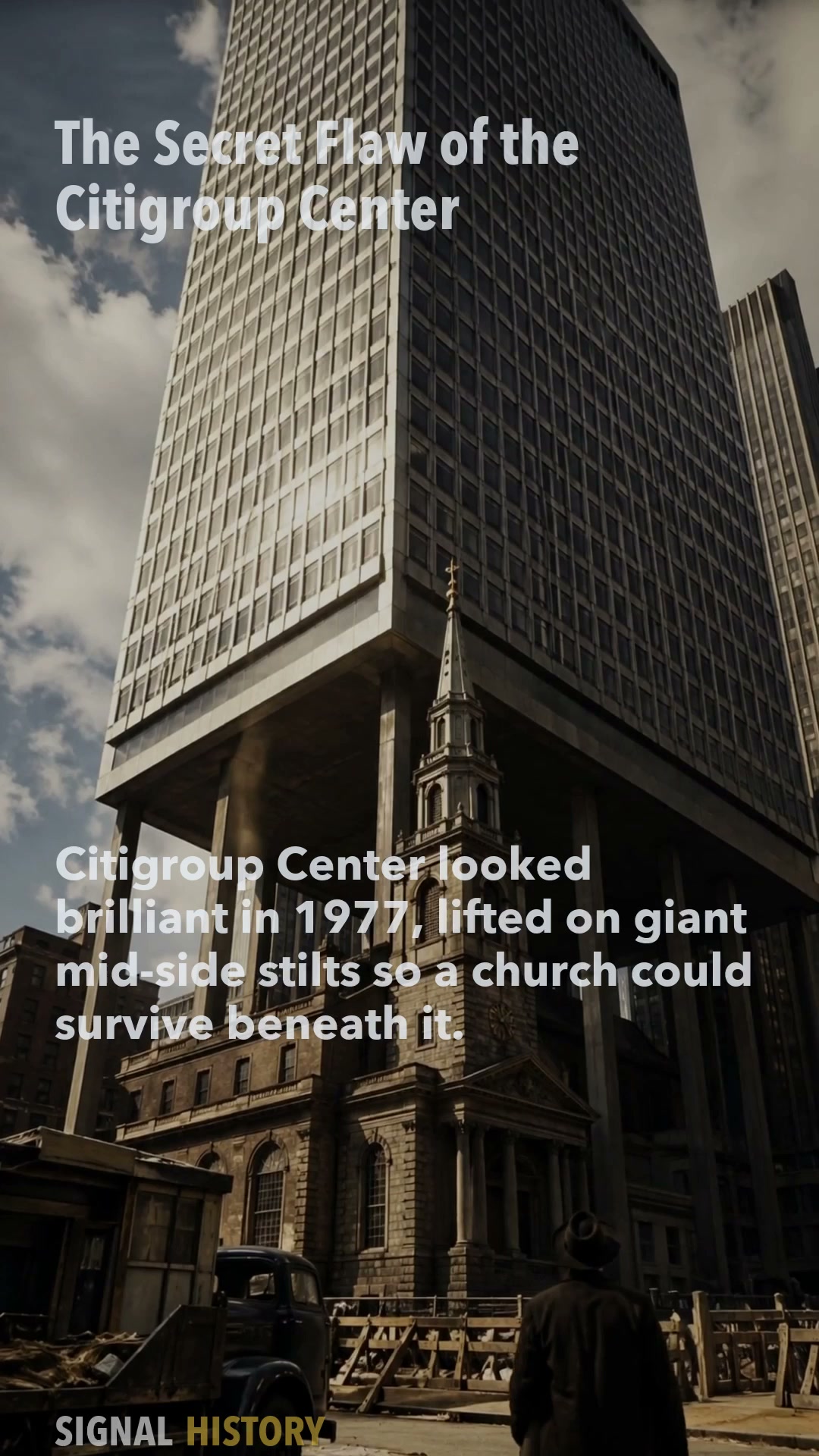
A skyscraper almost killed Manhattan. Citigroup Center looked brilliant in 1977, lifted on giant mid-side stilts so a church could survive beneath it. That elegant compromise created the mystery: why did one phone call suddenly terrify its engineer?
The call came from student Diane Hartley. She asked about quartering winds, the gusts that slam a tower on its corners. The engineer checked again and found the gamble: the striking shape depended on assumptions nobody had fully challenged.
Then the nightmare appeared. Key joints had been bolted, not welded, after cost cutting during construction. In corner-striking winds, those connections could fail. A serious hurricane might not just damage the tower. It could topple it into midtown.
So crews worked at night, secretly welding steel plates over the weak joints while a hurricane neared. The public learned decades later. That is why this story still matters: great engineering is not perfection. It is catching the flaw before gravity does.
Key facts
- The Citigroup Center's support columns were placed in the center of its sides to accommodate a pre-existing church.
- An engineering student discovered the building's vulnerability to quartering winds.
- Cost-saving bolted joints made the structure susceptible to collapse during a major hurricane.
- The building had to be repaired secretly at night while a hurricane threat loomed.
- The public didn't learn about the terrifying engineering crisis until roughly twenty years later.
Why it matters
It serves as a classic engineering ethics case study, highlighting the importance of investigating and correcting potentially fatal design flaws regardless of reputation.
The Signal Brief
One sourced idea worth your attention, in your inbox. No noise.