The Black Death: How Plague Reordered Work and Power
The Black Death killed half of Europe and accidentally empowered surviving workers — wages rose, serfdom weakened, and governments failed to restore the old feudal order.
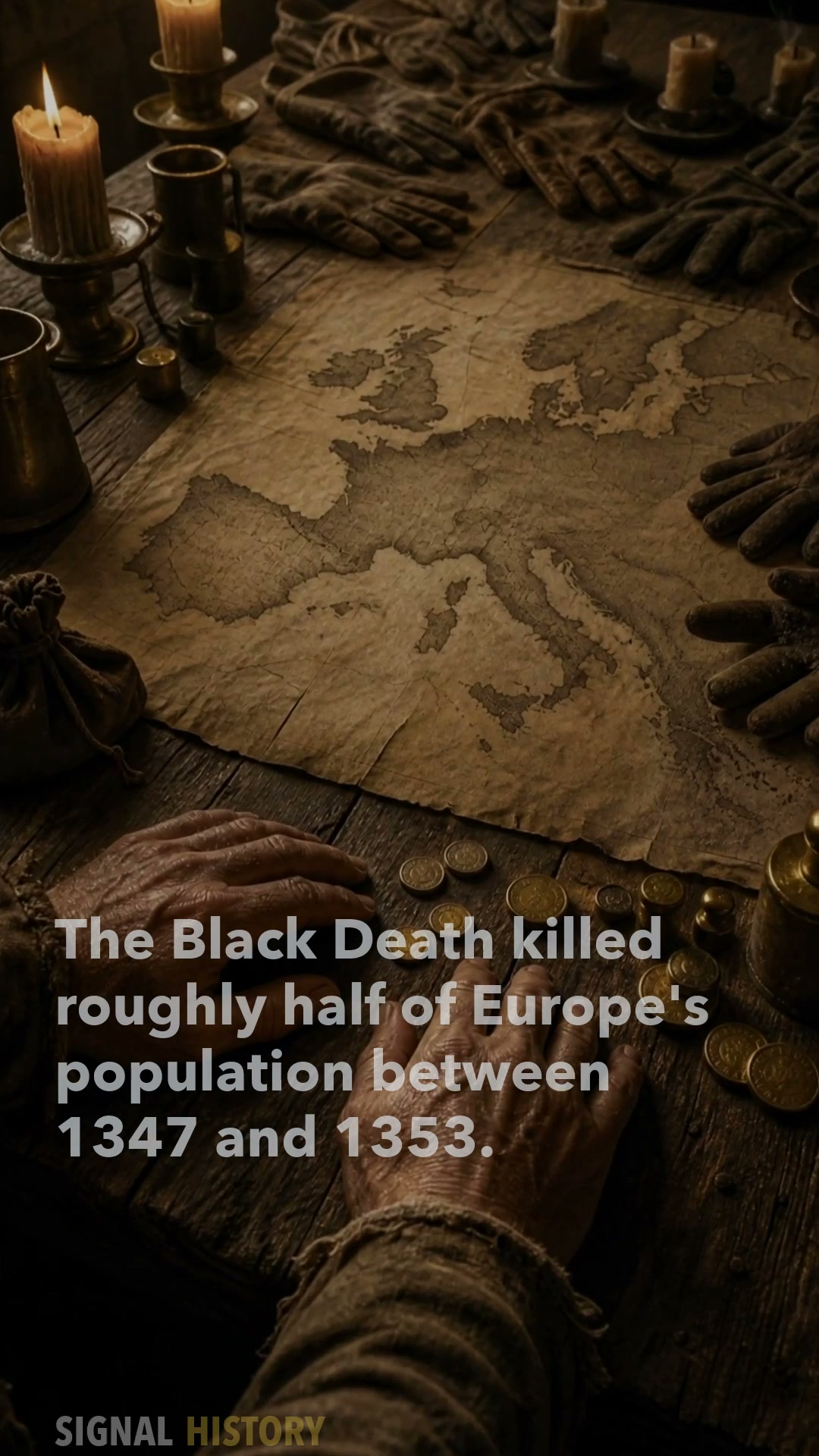
The Black Death killed roughly half of Europe's population between 1347 and 1353. The labor supply collapsed almost overnight. Surviving workers found themselves in demand for the first time in generations. Wages climbed because every remaining pair of hands now carried real bargaining power.
Landlords who once dictated terms suddenly competed for tenants and field workers. Peasants abandoned low-paying estates for whoever offered better pay and conditions. Serfdom weakened across Western Europe as laborers gained mobility their grandparents never had.
England's Statute of Laborers in 1351 froze wages at pre-plague levels and banned workers from leaving their employers. France passed similar laws. These controls fueled resentment that exploded into uprisings like the English Peasants' Revolt of 1381.
The feudal grip never fully recovered. Where wage caps failed, workers kept their gains and a new economic floor took hold. One catastrophic plague season permanently redrew the line between those who owned land and those who worked it.
Key facts
- A mass death event became a labor shock: workers grew scarce.
- Landlords lost leverage.
- States tried to freeze the old order.
- Europe’s social balance shifted.
- Very strong proven demand in the packet.
Why it matters
With multiple Black Death explainers above 1M views and broad evergreen search interest. Probe and draft align on a high-value angle: aftermath.
The Signal Brief
One sourced idea worth your attention, in your inbox. No noise.