How the Meiji Restoration Transformed Japan in One Generation
Black ships forced open Japan, and young samurai answered with a brutal bargain: modernize before foreign empires could dominate them. In one generation, the Meiji Restoration turned a feudal order into a centralized industrial state strong enough to defeat Russia in 1905.
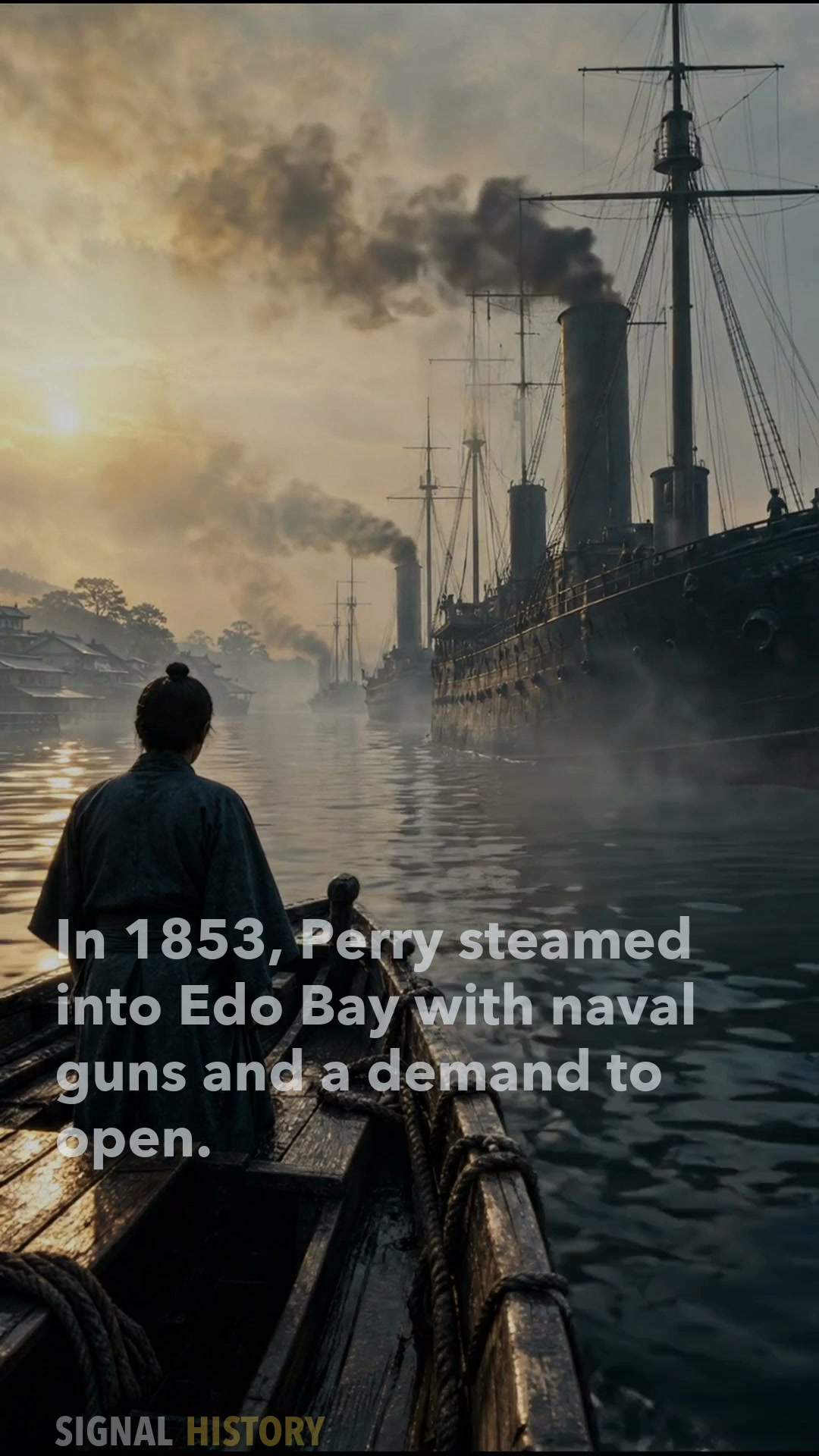
Black ships broke Japan's peace. In 1853, Perry steamed into Edo Bay with naval guns and a demand to open. After more than two centuries of isolation, the Tokugawa order suddenly looked exposed.
That shock triggered a gamble. In 1868, young samurai toppled the shogunate and restored imperial rule. Their logic was hardheaded. Centralize fast, copy useful tools, and avoid the foreign domination swallowing weaker states across Asia.
The revolution was structural. Leaders built railways, taxes, schools, and a conscript army loyal to the center. Feudal domains stopped acting like separate worlds. Japan could now move goods, train soldiers, and enforce decisions nationally.
By 1905, the result was undeniable. Japan's new industrial base helped it defeat Russia at sea. So the Meiji Restoration still matters. It was not simple imitation. It was national reinvention under the threat.
Key facts
- A group of young samurai overthrew the Tokugawa shogunate and launched the most rapid state modernization in history.
- Within forty years.
- Feudal Japan built railways.
- And an industrial base powerful enough to defeat Russia in 1905.
- The Meiji Restoration shows how a society can reinvent itself when the alternative is colonization.
Why it matters
Very strong YouTube demand. History Matters at 3.3M views, Voices of the Past at 2.1M.
The Signal Brief
One sourced idea worth your attention, in your inbox. No noise.