Nociception: The Neural Pathways of Pain Perception
Wounds don't feel pain. When cells break apart, they release chemical debris. Tiny nerve endings called nociceptors detect that debris and fire an electrical pulse.
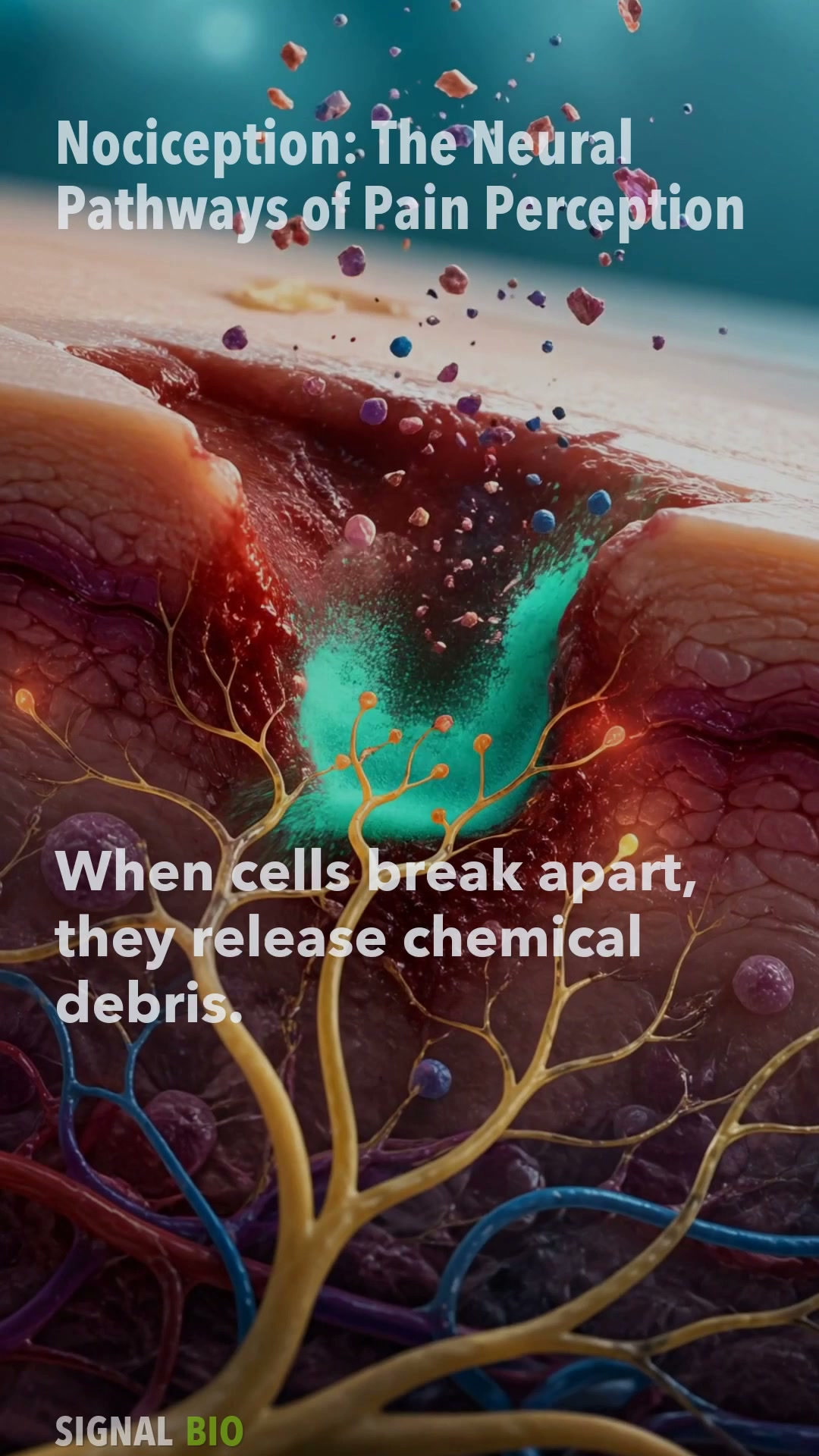
Wounds don't feel pain. When cells break apart, they release chemical debris. Tiny nerve endings called nociceptors detect that debris and fire an electrical pulse. The wound sends a message — not the pain itself.
That pulse races up nerve fibers toward the spinal cord. But it doesn't go straight to the brain. It hits a checkpoint called the dorsal horn, where the signal gets filtered before moving on.
Here's where it gets strange. Your spinal cord can amplify that signal or shut it down completely. Rubbing a bumped elbow activates competing nerves that close the gate, blocking pain before the brain ever knows.
Pain isn't a direct line from wound to brain. It's a negotiation — edited, amplified, or silenced at every relay. Your nervous system doesn't just report damage. It decides how much you need to feel.
Key facts
- The journey of a pain signal from peripheral nerve endings through the spinal cord's dorsal horn to the brain.
- Including the 'gate control' mechanisms that can mechanically amplify or block it.
- Strong educational engagement (top video ~150k views, others >1M).
- Concepts like 'gate control theory' and 'ascending tracts' drive high viewership.
- High educational engagement mapped to exact anatomical terminology.
Why it matters
Pain is not a condition; it is a rapid-fire conversation. When a physical injury occurs, the tissue itself doesn't hurt.
The Signal Brief
One sourced idea worth your attention, in your inbox. No noise.