Nociception: The Neural Architecture of Pain Signals
Pain lies to you first. Before pain exists, a cut or burn spills warning chemicals into tissue, and tiny nerve endings convert that damage into electricity, launching the message that will become hurt. That message does not travel as one clean line.
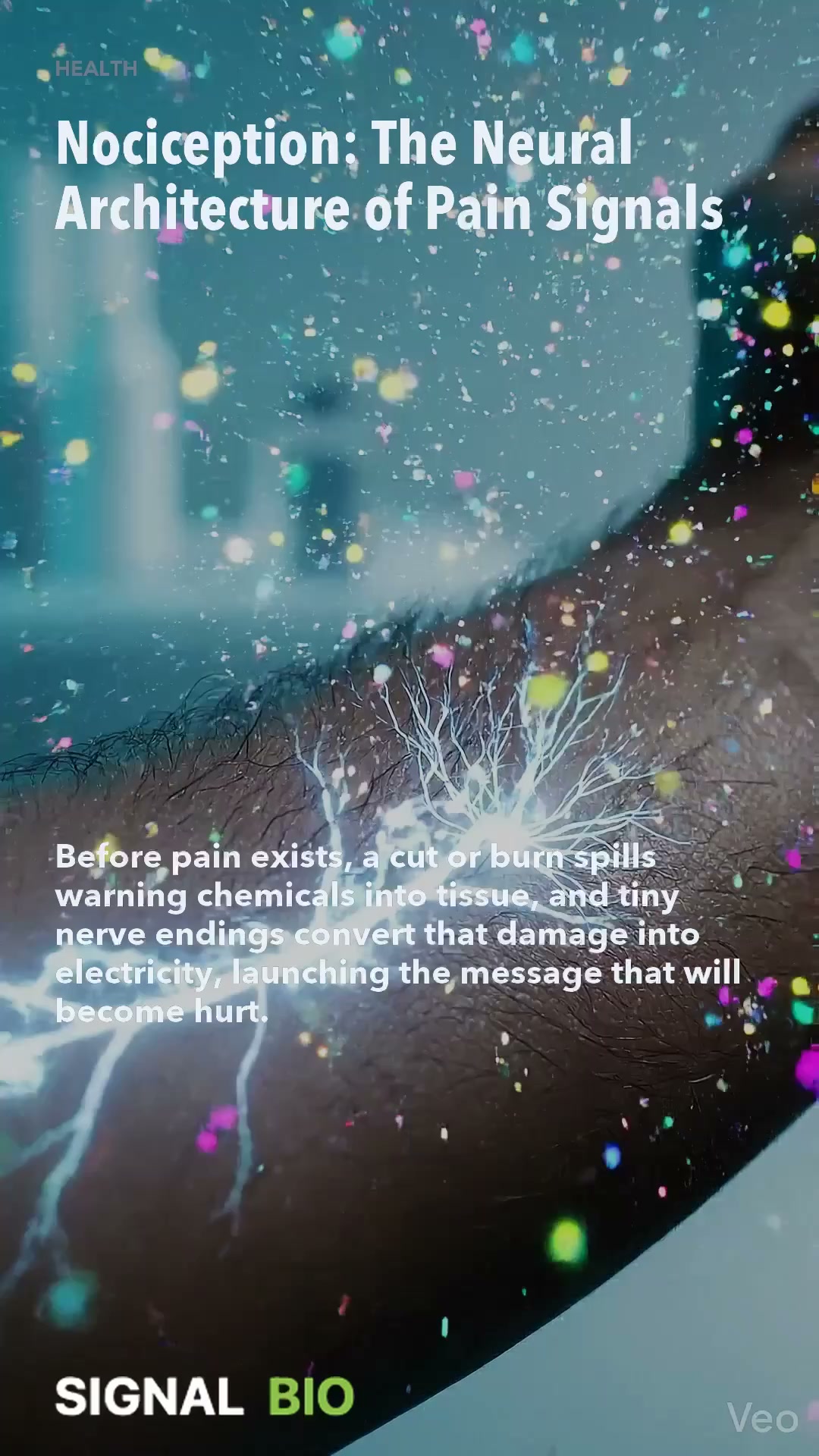
Pain lies to you first. Before pain exists, a cut or burn spills warning chemicals into tissue, and tiny nerve endings convert that damage into electricity, launching the message that will become hurt.
That message does not travel as one clean line. Some nerve fibers fire fast and sharp. Others move slower and linger. What feels like one instant is already split into separate warnings before the brain ever sees it.
Next comes the spinal cord, and it is not just a tunnel. It acts like a gate. Cells there can amplify, soften, or redirect incoming signals, editing the story before it climbs toward higher brain regions.
Only then does the somatosensory cortex map where it hurts and how much it matters. So pain is not a single signal racing inward. It is a built experience, assembled step by step, which is why the same injury can feel different.
Key facts
- Follows a physical damage signal from peripheral nerve endings.
- Through the spinal cord's complex gating mechanism.
- And up to the brain's somatosensory cortex.
- Solid evergreen viewership demonstrating strong interest in the neurobiology of pain.
- With a clear focus on pathways over symptom relief.
Why it matters
Pain is not a single experience. Multi-stage electrical transmission known as nociception.
The Signal Brief
One sourced idea worth your attention, in your inbox. No noise.