Insulin Resistance: How Cells Ignore the Glucose Signal
Your cells are starving — surrounded by sugar. Insulin normally works like a key. It locks into receptors on each cell and triggers an internal relay.
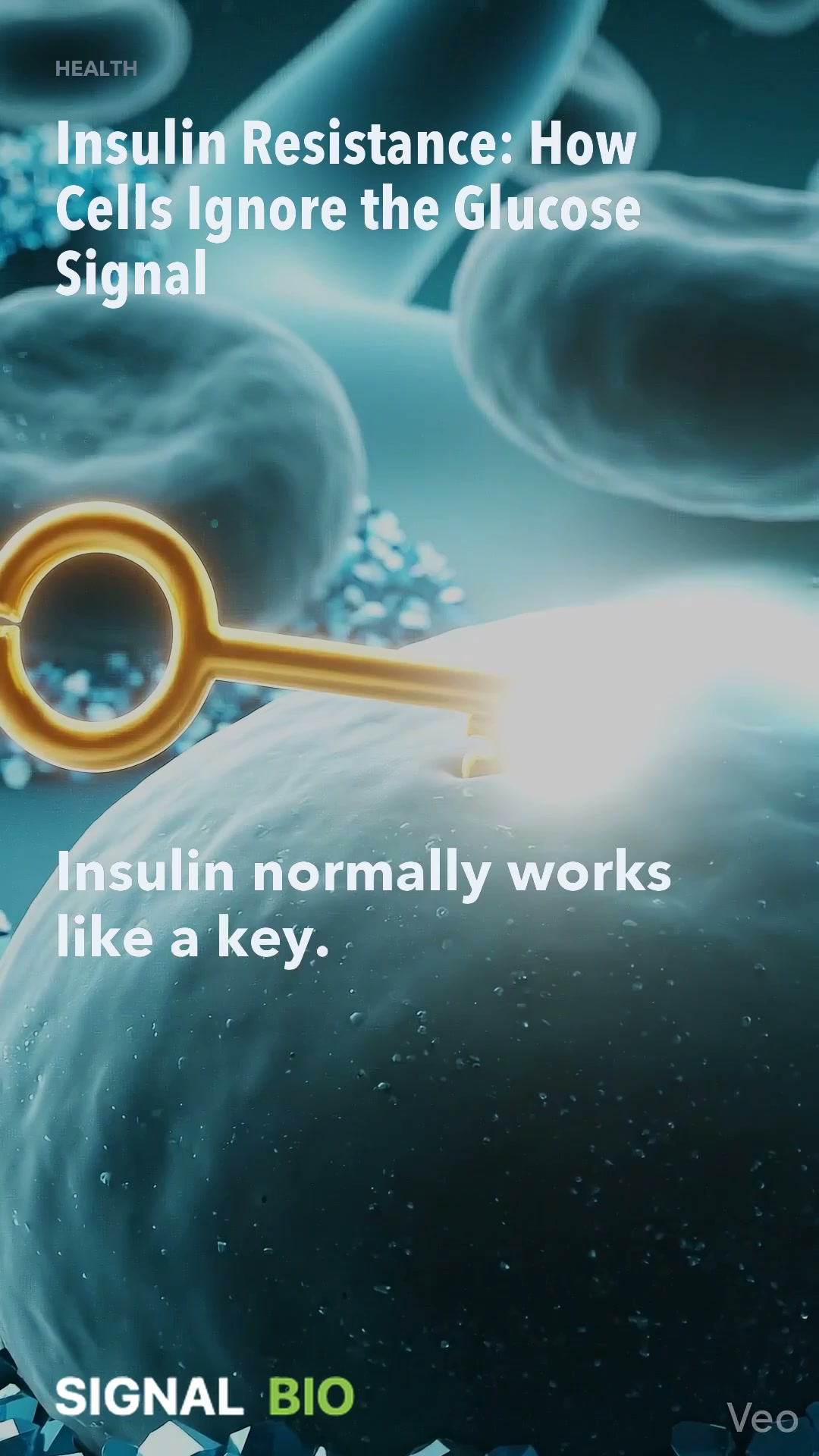
Your cells are starving — surrounded by sugar. Insulin normally works like a key. It locks into receptors on each cell and triggers an internal relay. That relay opens tiny gates called transporters, pulling sugar inside for energy.
In insulin resistance, the key still fits, but the relay jams. Fat buildup inside cells blocks the signal chain. The transporters never rise to the surface, so sugar stays locked outside, unable to enter.
Now glucose floods the bloodstream. The pancreas panics and pumps out even more insulin, but more keys cannot fix a broken lock. The system spirals: rising sugar, rising insulin, and cells still starving.
That starvation drives the fatigue, cravings, and stubborn weight gain millions feel daily. But the relay can be repaired. Cutting processed sugar, building muscle, and improving sleep each restore the signal your cells stopped hearing.
Key facts
- The molecular breakdown of the insulin receptor pathway that leads to elevated blood sugar and metabolic energy crashes.
- High health-literacy demand with 700k+ views.
- Extremely useful for modern metabolic health education.
- Think of insulin as a key and your cells as a locked door.
- In insulin resistance.
Why it matters
The lock is jammed—sugar builds up in the hallway of your blood. The cells inside are starving for energy.
The Signal Brief
One sourced idea worth your attention, in your inbox. No noise.