Caffeine and Adenosine: Why You Feel Awake but Still Tired Later
You feel awake after caffeine because it blocks adenosine receptors. Adenosine is one of the signals that makes you feel sleepier as the day goes on Caffeine does not remove adenosine.
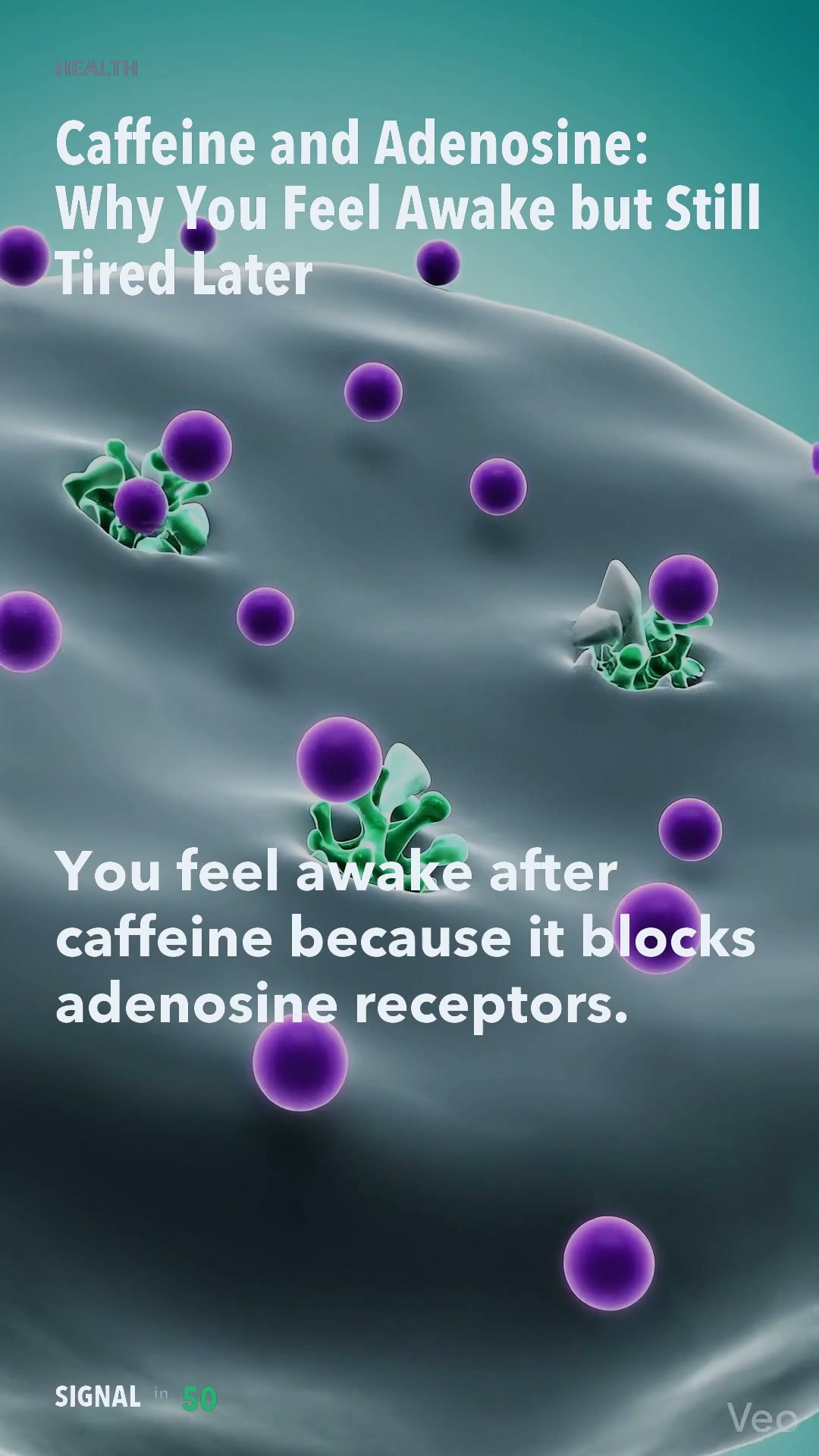
You feel awake after caffeine because it blocks adenosine receptors. Adenosine is one of the signals that makes you feel sleepier as the day goes on, and caffeine basically parks in those docking spots so the brain reads less of that tired message.
Caffeine does not remove adenosine. You feel sharper, the underlying sleep pressure is still building in the background. The fatigue signal is being muffled, not erased, which is why alert can turn into suddenly exhausted once the caffeine effect fades.
That sets up the late-day problem. If you use caffeine too late, you can feel less sleepy at night, fall asleep later, and cut into recovery. The next afternoon can feel even rougher, because you are carrying extra sleep loss on top of the same masked pressure.
The practical takeaway is simple: use caffeine as borrowed alertness, not real rest. Earlier timing is usually easier on sleep, and if you keep crashing later, the fix may be less late caffeine and more actual sleep.
Key facts
- Caffeine blocks adenosine receptors instead of removing adenosine itself.
- Sleep pressure is masked but not erased.
- That is why late-day caffeine can delay sleep and create stronger afternoon crashes.
- Still tired later starts with the main mechanism.
- A clear explainer should separate the trigger, the internal change, and the practical result.
Why it matters
This matters because Caffeine blocks adenosine receptors instead of removing adenosine itself, so sleep pressure is masked but not erased. That is why late-day caffeine can delay sleep and create stronger afternoon crashes.
The Signal Brief
One sourced idea worth your attention, in your inbox. No noise.