The Oxygen Ceiling: The Physiological Limits of VO2 Max
Your lungs aren't the bottleneck. When you're gasping after a sprint, it feels like an air problem. It's not.
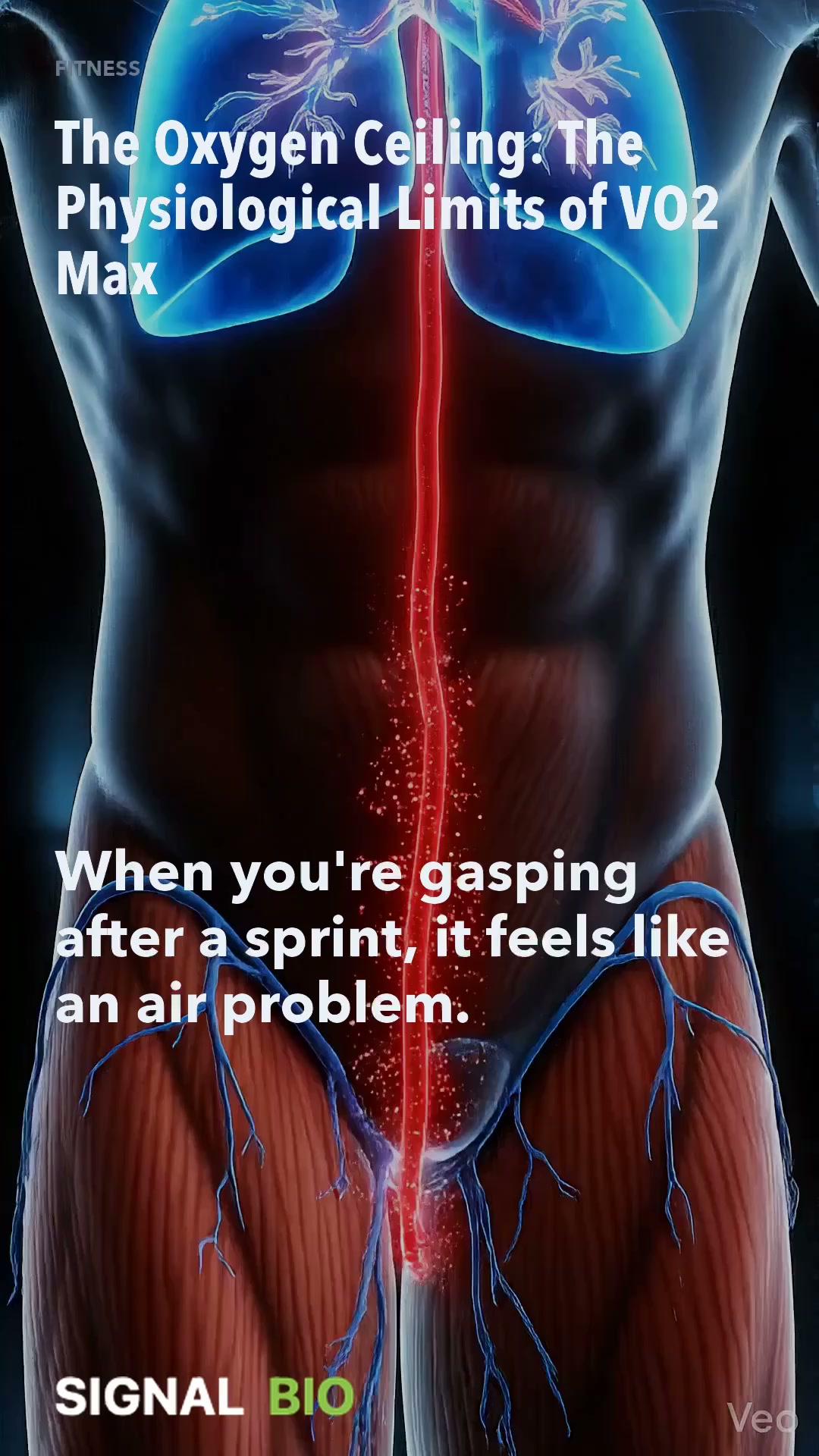
Your lungs aren't the bottleneck. When you're gasping after a sprint, it feels like an air problem. It's not. Your lungs load plenty of oxygen into the blood. The real limit hides deeper.
That limit is VO2 max — the most oxygen your body can use per minute. Two systems control it. Your heart sets the supply ceiling through stroke volume, how much blood each beat pushes out.
Supply is only half the equation. Inside your muscles, tiny powerhouses called mitochondria pull oxygen from blood and convert it to energy. Denser capillary networks let muscles extract more from every heartbeat.
Elite athletes eventually hit a heart they can't enlarge further, so their gains shift to the cellular side. For most people, both systems still respond to training. Your oxygen ceiling isn't fixed — you can raise it from either direction.
Key facts
- Moving beyond 'cardio' as a vague concept to analyze the hard bottlenecks of aerobic capacity.
- This candidate examines the Central (cardiac output, stroke volume) vs.
- Peripheral (mitochondrial density.
- Capillary surface area) limiting factors that determine how much oxygen a human can actually utilize.
- High interest due to the 'longevity' trend.
Why it matters
Peter Attia's involvement signals high-authority demand. Combines macro-organ systems (heart/lungs) with micro-mechanics (mitochondria).
The Signal Brief
One sourced idea worth your attention, in your inbox. No noise.