The Turning Point Behind The Dragon Chimera
Same dragon, opposite fate. In Europe, dragons became monsters to kill. In East Asia, they brought rain, rule, and balance.
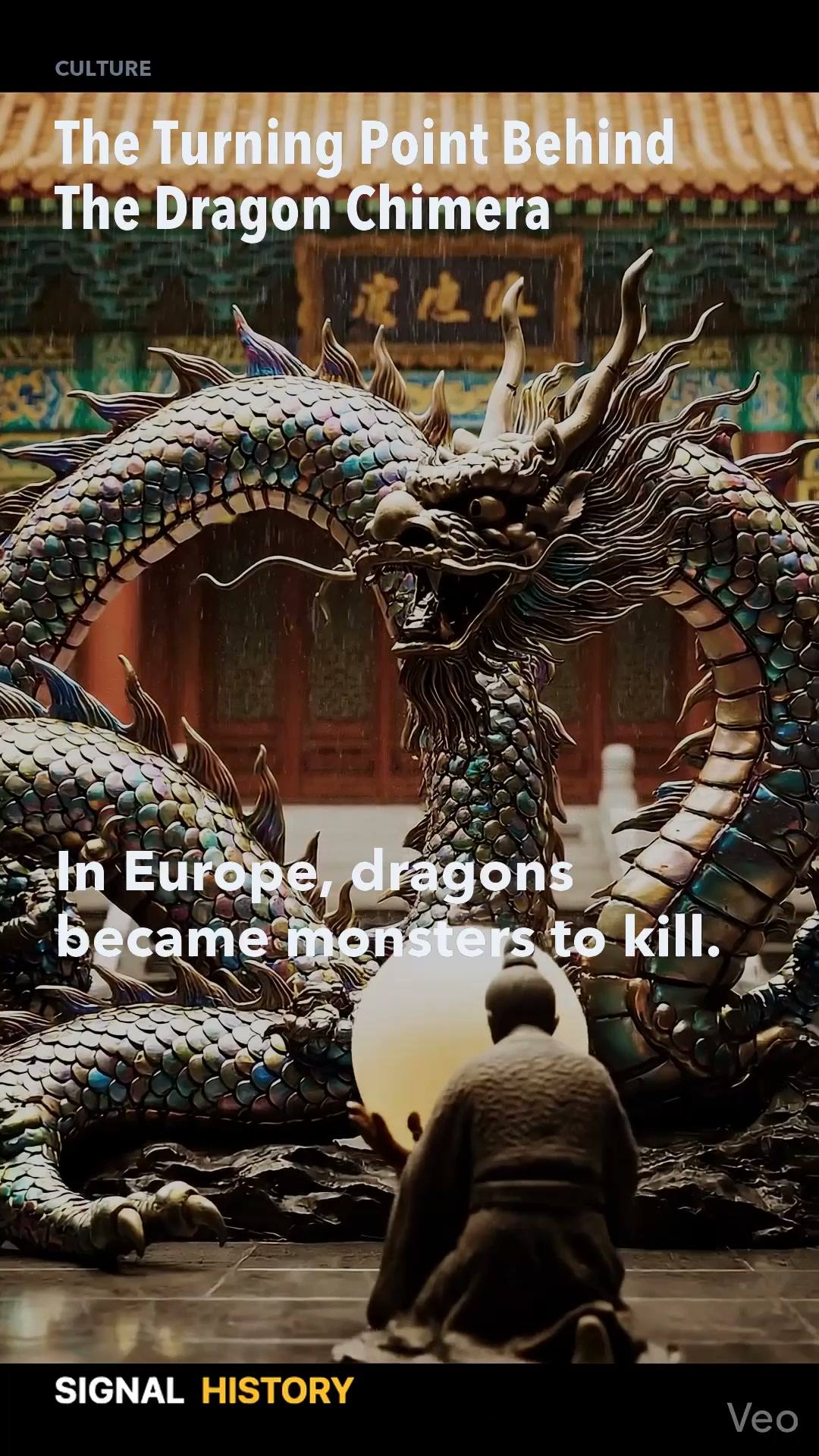
Same dragon, opposite fate. In Europe, dragons became monsters to kill. In East Asia, they brought rain, rule, and balance. One chimera body entered two story worlds and came out morally reversed.
Why did that split stick? Because dragons felt almost believable. Claws, scales, horns, fangs. Built from familiar animals, they gave storytellers a sturdy shape for bigger ideas like danger, protection, kingship, and order.
Then the meanings hardened. In Europe, dragons poisoned water, burned fields, blocked roads, and hoarded treasure until a hero slew them. In East Asia, they ruled storms and rivers, dangerous yet life-giving, and linked to rightful power.
That is the turning point. Anatomy never decided what dragons meant. Culture did. People rebuilt the same beast around local fears, needs, and ideas of order, which is why both versions still feel strangely convincing today.
Key facts
- A turning-point comparison of how one mythic body split into two moral worlds.
- The dragon hardened into a beast of fire.
- And disorder to be slain.
- In East Asia, the same composite creature remained tied to rain, authority, and cosmic balance.
- The arc follows the shared chimera design.
Why it matters
The pressures that shaped it. And the cultural choices that gave one creature opposite meanings.
The Signal Brief
One sourced idea worth your attention, in your inbox. No noise.