The Dead Man Who Moved an Army
A Signal Casefile reconstruction of Operation Mincemeat, the 1943 British deception that used a fabricated officer, pocket evidence, and false invasion papers to move German attention away from Sicily.
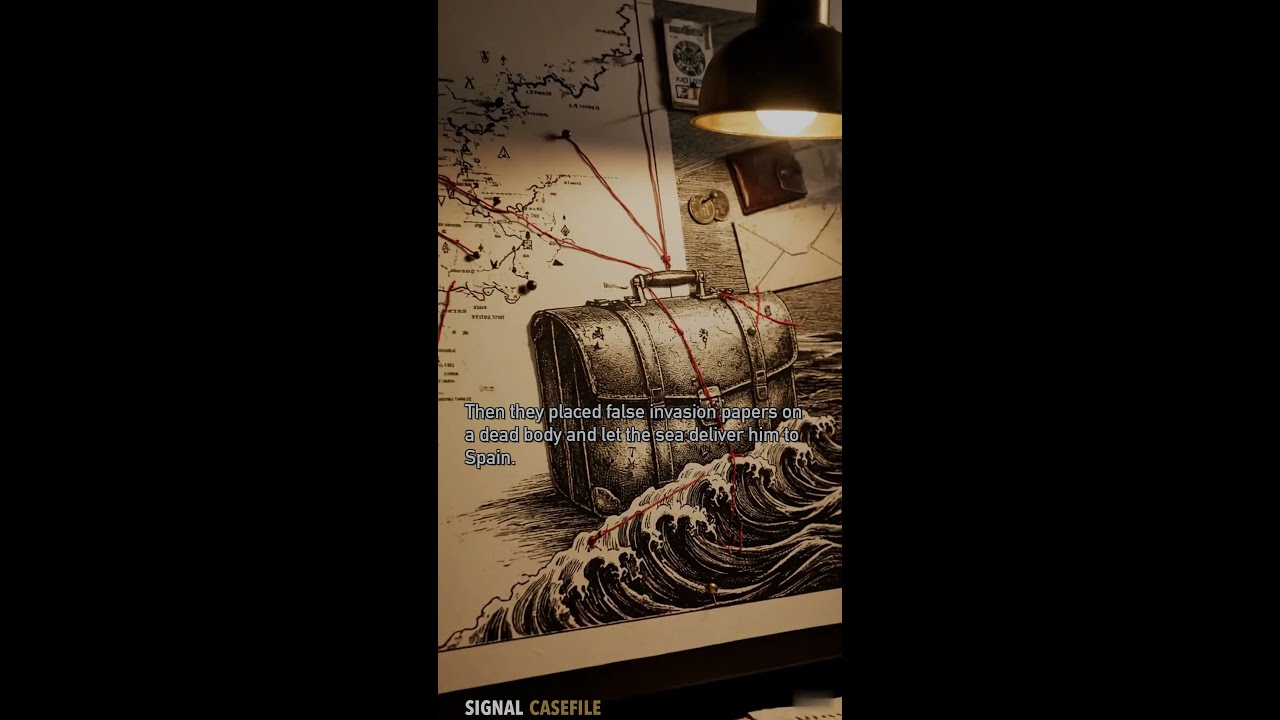
In 1943, Allied planners needed Germany to believe the invasion would land anywhere except Sicily. So British intelligence built a soldier who did not exist.
They gave him a name, a rank, personal letters, theater ticket stubs, and the ordinary clutter of a believable life. Then they placed false invasion papers on a dead body and let the sea deliver him to Spain.
The risk was not only whether the documents would be found. It was whether the lie would feel human enough to be trusted.
Spanish officials recovered the body, and the papers moved through the channels British intelligence hoped they would enter. German command read the bait and began shifting attention away from Sicily.
The casefile is disturbing because the weapon was not a bomb, a tank, or a code machine. It was paperwork wrapped around a corpse, designed to exploit the enemy's confidence in evidence.
Every detail mattered: the dates, the pockets, the personal grief, the boring fragments that make a fiction look real. Operation Mincemeat did not win the war by itself, but it helped move suspicion away from the real beachhead.
When Allied troops landed in Sicily, the deception had already worked on the map inside the enemy's mind. The strangest part is not that a fake man fooled an army.
It is that the fake man had to be made more believable than thousands of living soldiers. Sometimes history turns because someone learns how to make evidence lie with a human face.
Sources
The Signal Brief
One sourced idea worth your attention, in your inbox. No noise.