This Painting Was Banned in 2018. Here’s Why
John William Waterhouse’s 1896 painting turns a beautiful myth into a quiet scene of annihilation, then collides with modern debates after its temporary 2018 removal from Manchester Art Gallery. The image endures because it fuses seduction, power reversal, and disappearance into one suspended second.
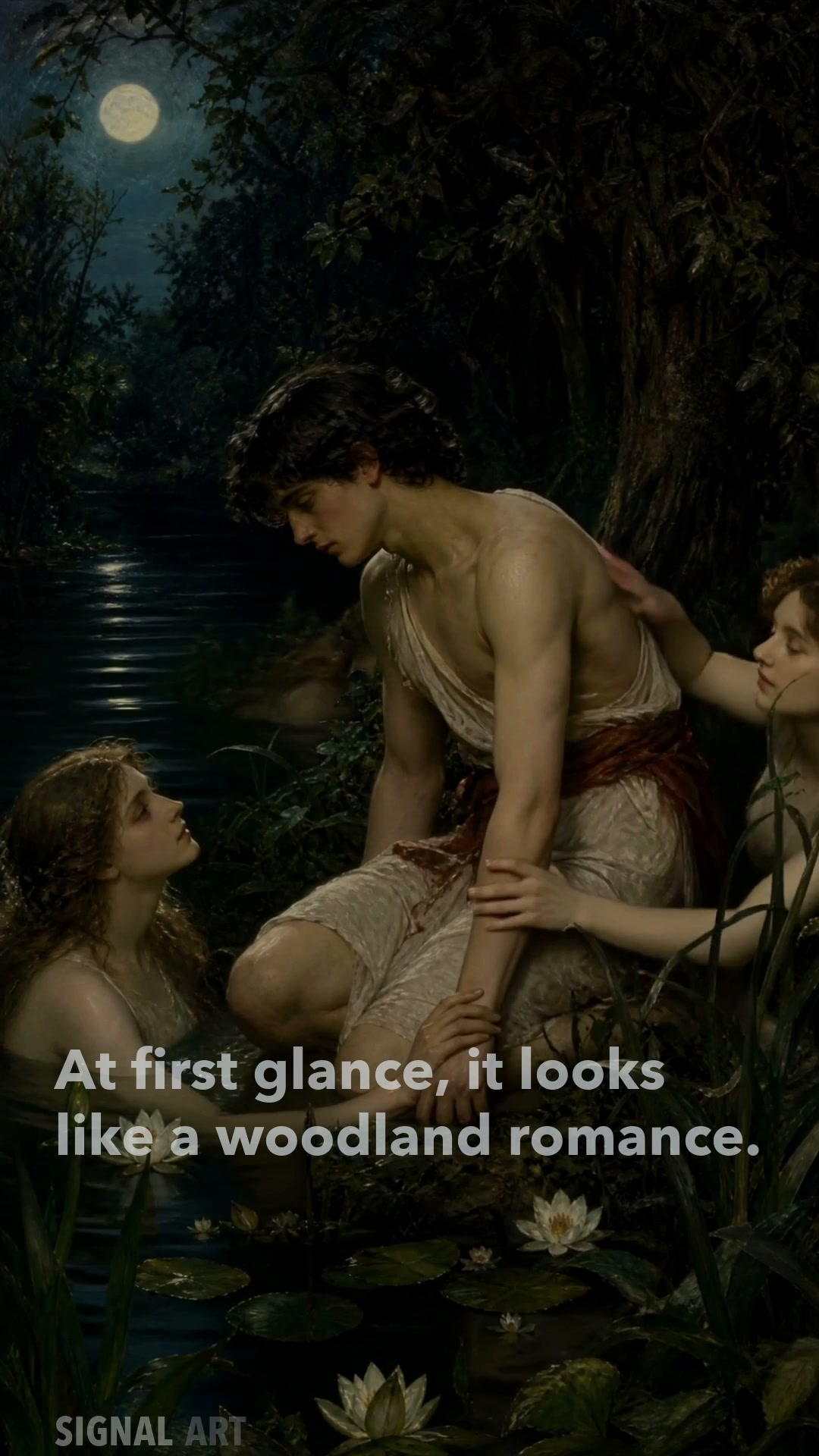
At first glance, it looks like a woodland romance. Then the hands come into focus. Pale fingers close around Hylas, and every gesture pulls him downward.
Painted in 1896, Hylas and the Nymphs stages a Greek myth on the edge of silence. Hylas, companion of Hercules, kneels for water on Chios. The naiads do not strike him.
The horror is compositional. Seven near-identical nymphs merge with lilies and dark water, while Hylas leans off balance, his red sash the last warm note against the green.
That tension resurfaced in 2018, when Manchester Art Gallery temporarily removed the painting to provoke debate over displaying female bodies. The work returned within a week, but the argument remained.
Key facts
- John William Waterhouse painted Hylas and the Nymphs in 1896.
- The painting depicts the Greek mythic moment when Hylas is lured into the water by naiads.
- Hylas is presented as the companion of Hercules and is separated from camp while fetching water.
- Waterhouse emphasizes the trap through pale nymphs that seem to grow out of the water lilies themselves.
- The repeated faces of the nymphs create an uncanny hive-mind effect rather than individualized seduction.
Why it matters
The painting reverses expected power roles by making the male figure passive and the female figures active agents.
The Signal Brief
One sourced idea worth your attention, in your inbox. No noise.