The Japanese Art That Refused To Hide Scars
Kintsugi turns a shattered bowl into a record of survival. Instead of hiding damage, this Japanese repair tradition joins broken pottery with lacquer and gold, making the crack the most meaningful part.
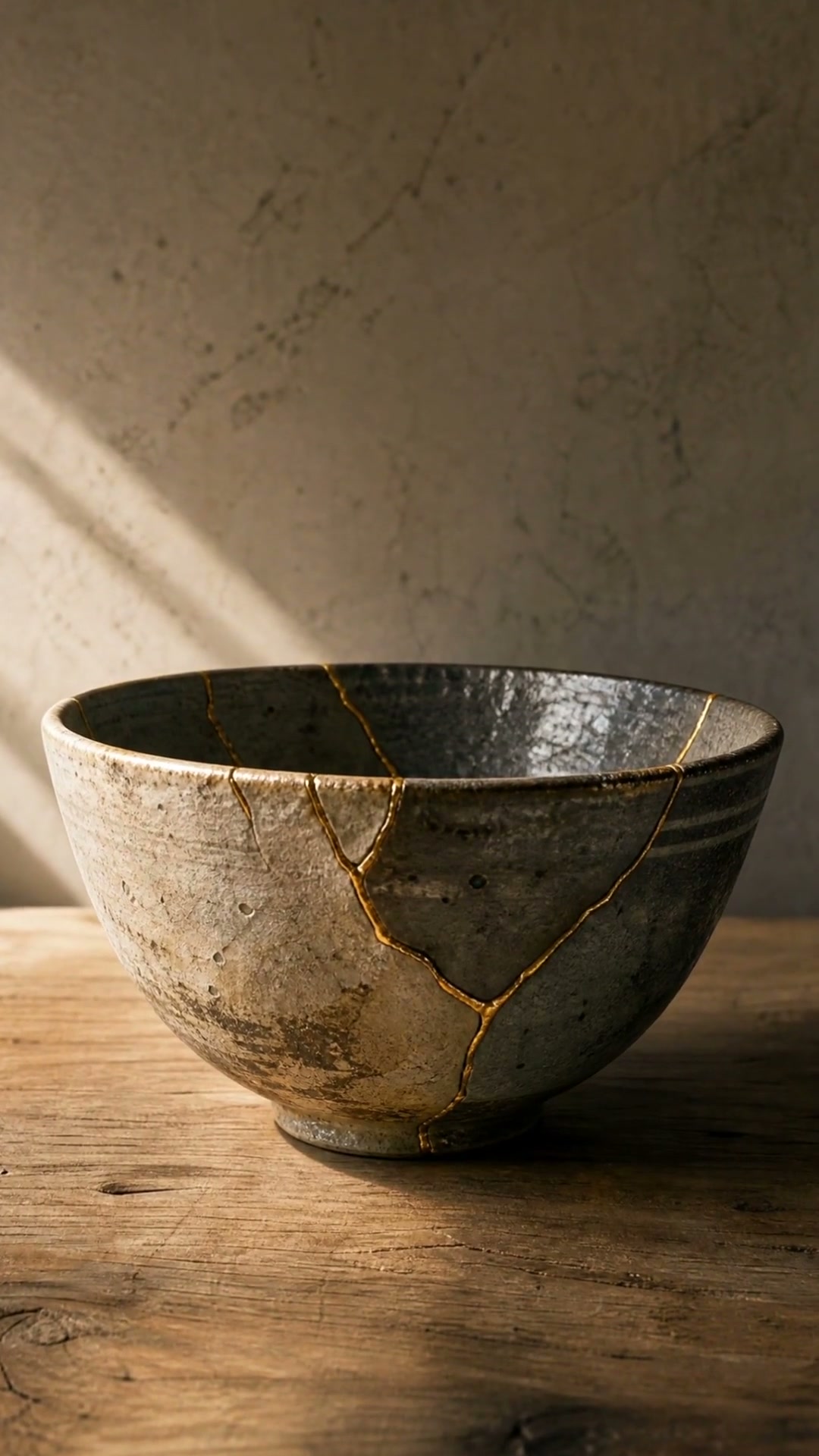
What if a broken bowl gained value? Kintsugi, the Japanese art of repair, answers yes. Instead of treating a fall as the end, it turns damage into the start of a different story.
That idea mattered because it challenged a deep habit. People often trust the untouched and the smooth. Once an object shows damage, its worth can seem to disappear with the missing pieces.
Kintsugi rejects that rule. Craftspeople rejoin pottery with cured lacquer, then finish the seam with gold. The crack is not hidden. It becomes the focal line, a visible record that something broke and was restored.
That is why kintsugi became more than a craft. It fits wabi-sabi, a view that finds beauty in age, irregularity, and time. The bowl is not pretending nothing happened. It is valuable because survival stays visible.
Key facts
- The bowl has already hit the floor.
- In most modern homes, that sound ends the story: shards, trash, replacement.
- One repair tradition asked a very different question: what if the break made the object more meaningful.
- That question matters because it reverses an instinct many people barely notice.
- We are taught to prize the untouched, the smooth, the factory-perfect.
Why it matters
Once damage appears, value seems to vanish with it. Kintsugi begins by rejecting that rule.
The Signal Brief
One sourced idea worth your attention, in your inbox. No noise.