Nighthawks - Loneliness Under Electric Light
Strange question: why does Nighthawks feel trapped? Hopper paints a glowing diner in 1942, yet the warmest spot on the block feels sealed. You can see comfort perfectly.
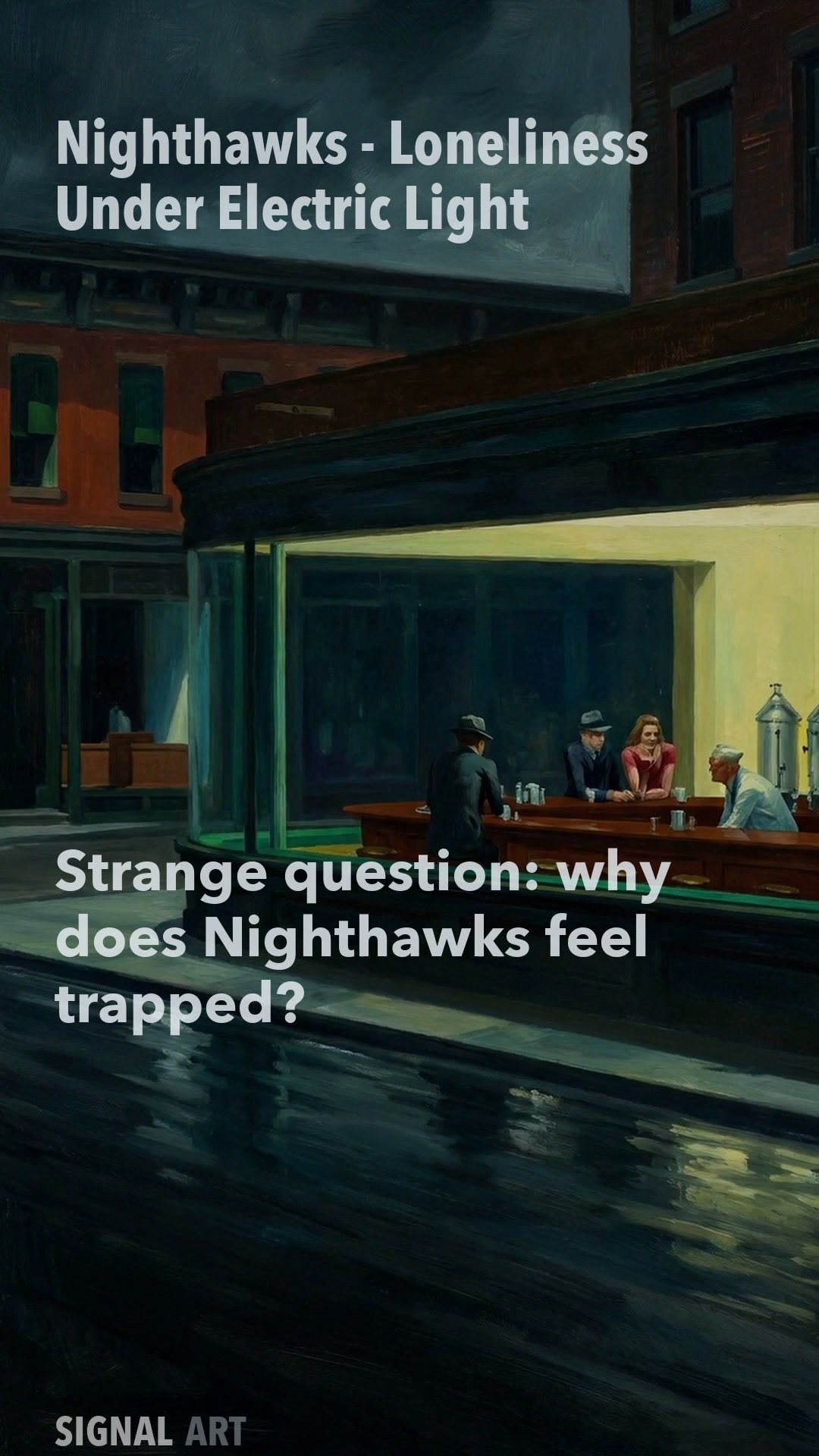
Strange question: why does Nighthawks feel trapped? Hopper paints a glowing diner in 1942, yet the warmest spot on the block feels sealed. You can see comfort perfectly. You just cannot enter it.
Then Hopper tightens it. The glass curves like an aquarium wall. There is no obvious door. Nobody leans or waves. Electric light reveals everything while quietly turning each person into a separate island.
That is the trick. Hopper skips the crowd. People sit inches apart, yet the counter lines and empty street keep their silences from touching. Loneliness here is not mood alone. It is architecture.
That is why Nighthawks lasts. It does not just picture loneliness. It diagrams how a city can glow, expose, and still refuse contact. Once you spot that structure, modern life suddenly looks different everywhere.
Key facts
- Nighthawks was painted by Edward Hopper in 1942.
- The painting shows figures inside a brightly lit diner at night.
- Hopper is widely associated with images of modern American isolation and quiet urban scenes.
- The diner glass creates a strong separation between viewer and figures.
- The empty street intensifies the sense of urban loneliness despite the presence of people.
Why it matters
Nighthawks matters because it turned modern isolation into a clean, unforgettable visual structure.
The Signal Brief
One sourced idea worth your attention, in your inbox. No noise.