Monet's Rouen Cathedral Series - The Building That Would Not Stay Still
How can stone flicker? Monet’s Rouen Cathedral series makes a church look unstable. The facade seems to breathe because sun, haze, and shadow keep repainting it, turning heavy stone into something that feels almost like weather.
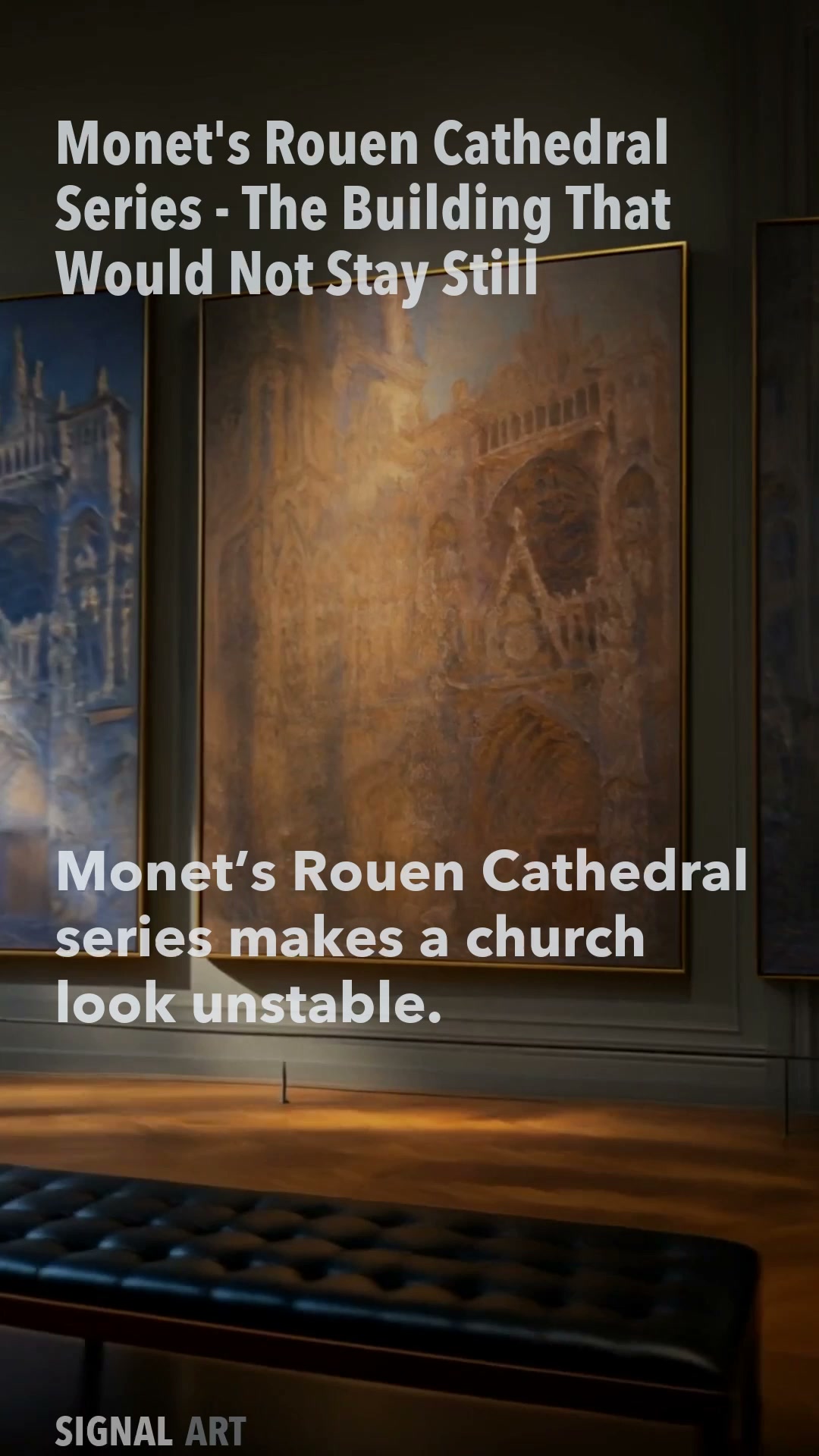
How can stone flicker? Monet’s Rouen Cathedral series makes a church look unstable. The facade seems to breathe because sun, haze, and shadow keep repainting it, turning heavy stone into something that feels almost like weather.
The secret is repetition. From 1892 to 1894, Monet painted the same facade again and again, not to pin it down, but to catch each hour changing the air around it.
Up close, the method is blunt and brilliant. Broken brush marks and warm-cool color swaps replace hard outlines. Detail fades. Light thickens. Your eye assembles the cathedral from pulses of pigment instead of clean lines.
That is why the series still matters. Monet did not weaken the cathedral. He changed the subject from stone to seeing. The building stays put, but perception keeps moving, and now you can actually feel that shift.
Key facts
- Rouen Cathedral Series was made by Claude Monet.
- The work is associated with 1892-1894 and Impressionism.
- A major version or holding is associated with Musee d’Orsay and other collections.
- Repeated views let color temperature and broken brushwork replace hard detail, so light becomes the true structure.
- Monet painted the cathedral facade in series, studying the same subject under changing conditions.
Why it matters
It matters because repetition becomes revelation: the object stays, but perception never does.
The Signal Brief
One sourced idea worth your attention, in your inbox. No noise.