Guernica - The Painting That Screams
War without heroes? Guernica says yes. Picasso kills the usual glory fast: no victors, no charge, just broken bodies, screaming mouths, and a black, white, gray room that feels like a trap snapping shut.
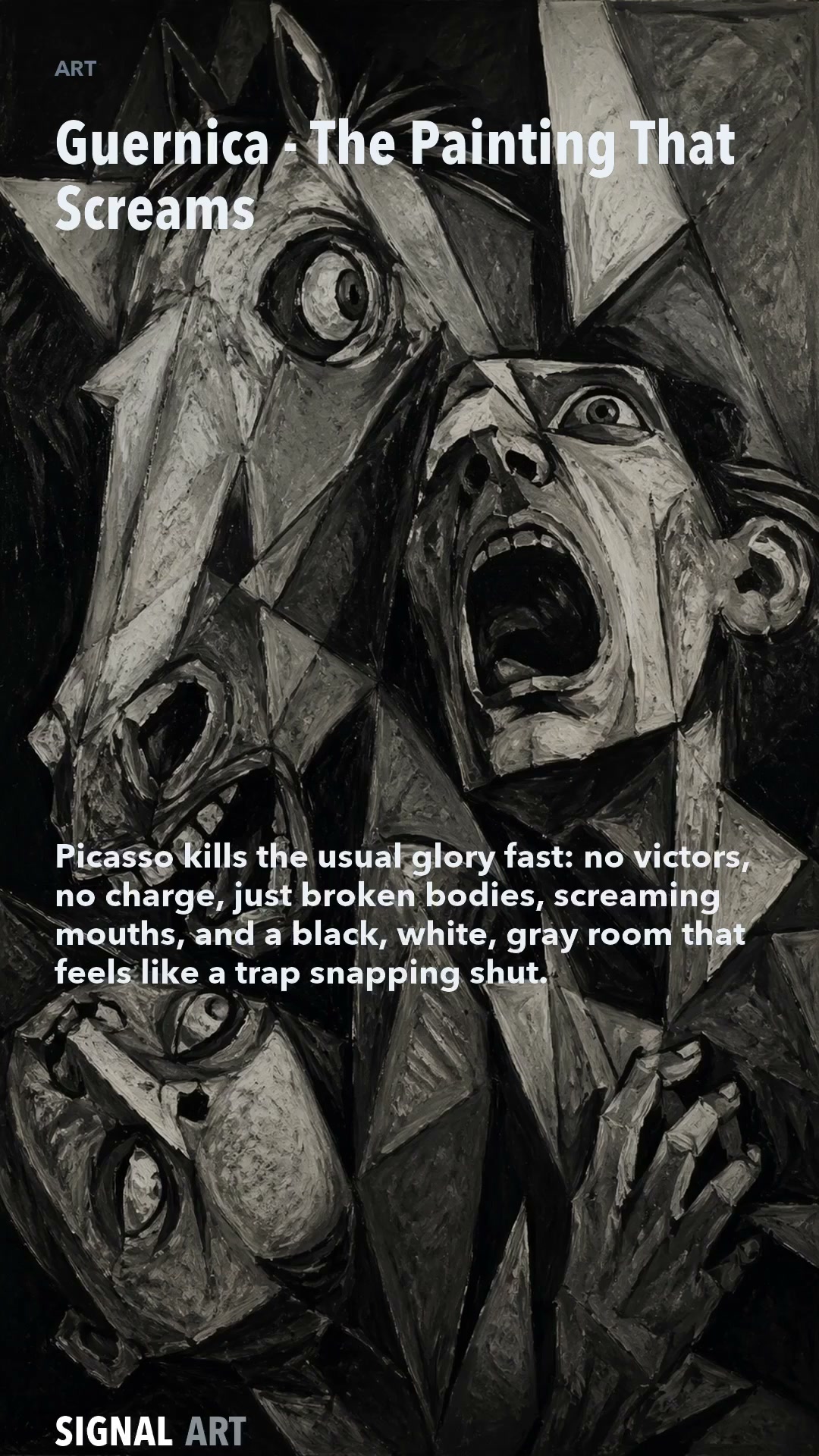
Guernica asks a brutal question: how do you paint war without heroes? Picasso answers fast. No flags. No victory. Just broken bodies, open mouths, sharp light, and a room that feels like it is crushing everyone inside.
The trigger was real. In 1937, Guernica was bombed during the Spanish Civil War, and civilians were caught in aerial attack. Instead of painting a neat event, Picasso painted what modern violence does to ordinary life.
That is why the figures splinter. The horse twists. A mother howls over her dead child. The glaring bulb feels like an eye and a weapon. The image refuses order because the violence itself shattered order.
So Guernica matters because it changed what an anti-war image could do. It does not sell glory or tidy tragedy. It makes suffering impossible to frame as noble, and that still changes how we see war.
Key facts
- Pablo Picasso painted Guernica in 1937 after the bombing of the Basque town of Guernica during the Spanish Civil War.
- The painting uses a black, white, and gray palette, fractured bodies, and screaming figures instead of heroic battle imagery.
- Its central figures, including the horse, bull, mother, child, and harsh light, make civilian suffering the subject of the work.
- Guernica was created for the Spanish Pavilion at the 1937 Paris International Exposition.
- The painting became a global anti-war symbol because it does not localize pain to one soldier or one side; it makes destruction feel universal.
Why it matters
Guernica matters because it transformed a specific atrocity into one of the most durable modern images of civilian suffering and anti-war protest.
The Signal Brief
One sourced idea worth your attention, in your inbox. No noise.