Caravaggio's The Calling of Saint Matthew - The Beam Of Light That Picks A Life
Why does this painting feel dangerous? Caravaggio’s The Calling of Saint Matthew turns a miracle into an interruption. A beam slashes the room, fingers aim, and one tax collector looks less blessed than suddenly exposed.
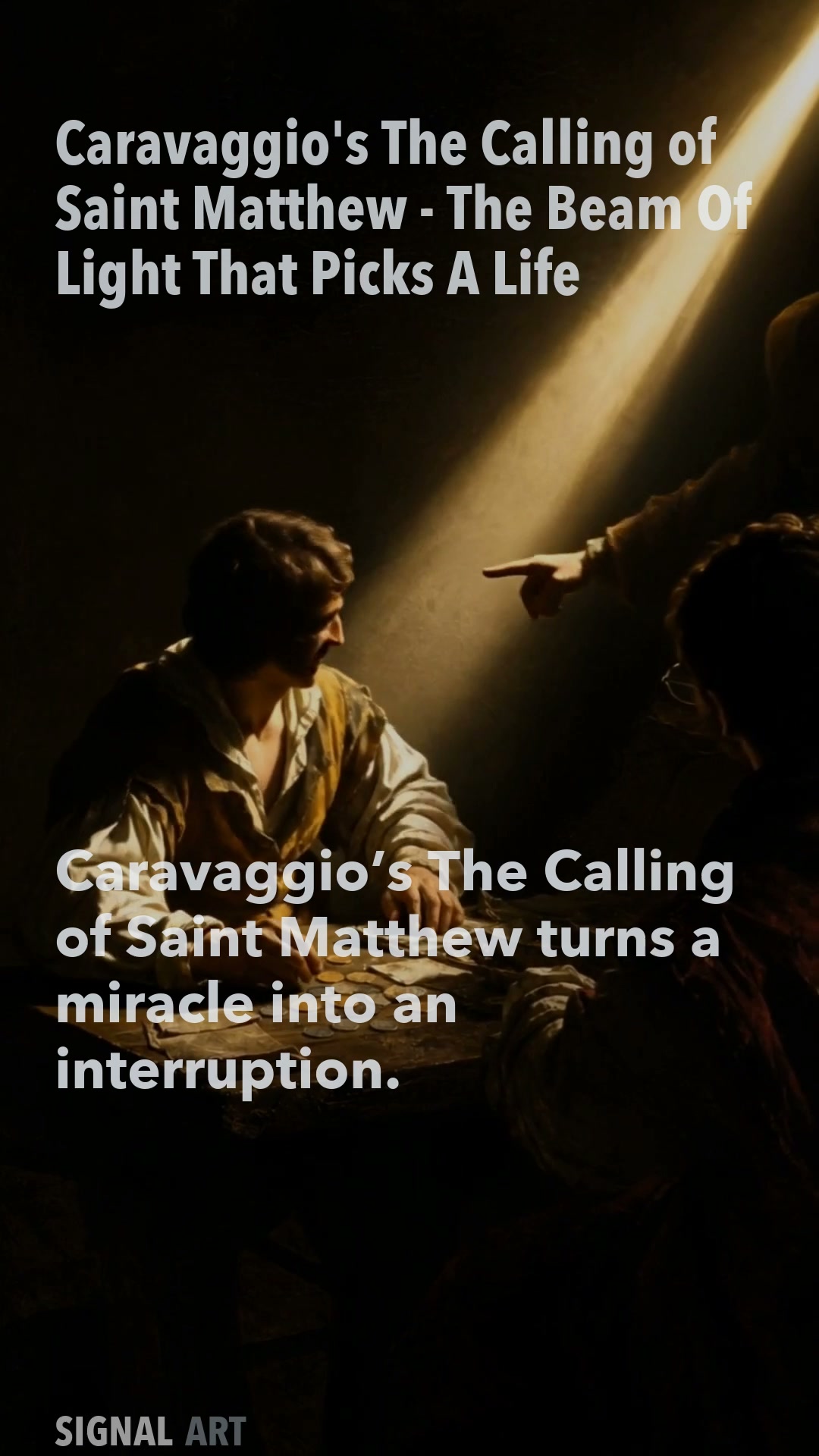
Why does this painting feel dangerous? Caravaggio’s The Calling of Saint Matthew turns a miracle into an interruption. A beam slashes the room, fingers aim, and one tax collector looks less blessed than suddenly exposed.
The shock comes from tenebrism, extreme dark against hard light, plus ordinary clothes and sharp hands. Nothing is distant or polished. The sacred event feels local, heavy, and close enough to stir the dust.
Painted around 1599 to 1600 for the Contarelli Chapel in Rome, it helped define his religious naturalism. Sacred history drops into the same room as money, doubt, grime, and ordinary human hesitation.
That is why the beam matters. The miracle is not floating overhead. It arrives like light through a door, choosing a life in real time. Caravaggio changed art by making revelation feel brutally seen.
Key facts
- The Calling of Saint Matthew was made by Caravaggio.
- The work is associated with 1599-1600 and Baroque.
- A major version or holding is associated with Contarelli Chapel, San Luigi dei Francesi, Rome.
- Caravaggio uses tenebrism, contemporary clothing, and sharp gestures to make a sacred moment feel immediate and physical.
- Painted for the Contarelli Chapel in Rome, it helped define his dramatic religious naturalism.
Why it matters
It matters because the miracle is not floating above life; it enters the room like light through a door.
The Signal Brief
One sourced idea worth your attention, in your inbox. No noise.