なぜ壊れた顔は証人になれるのか
This packet is a multi-painting visual poem Scene 1 is anchored to Pablo Picasso's Guernica Witness Room (1937). Scene 2 is anchored to Pablo Picasso's Blue Room Memory (1901-1904).
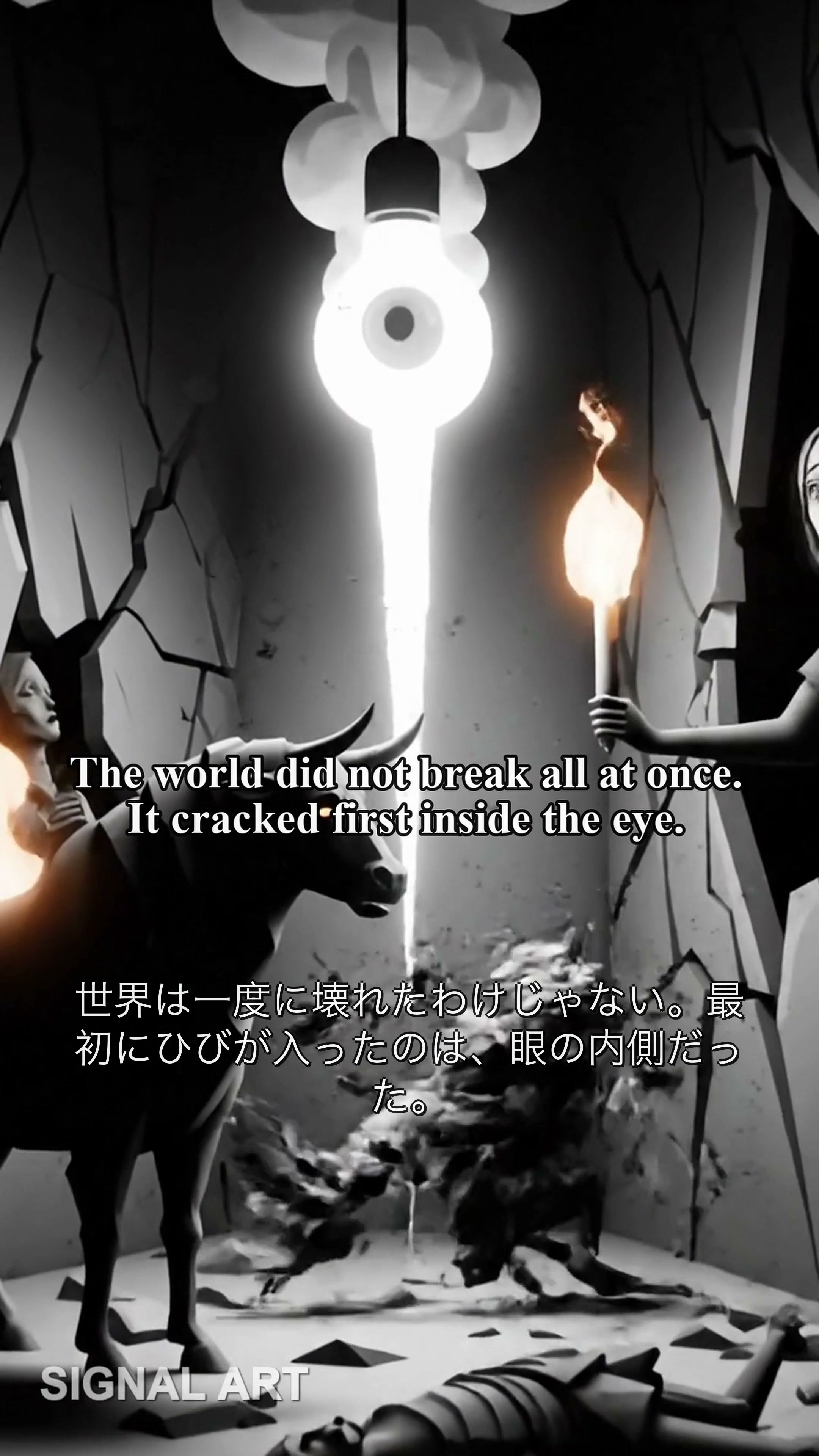
The world did not break all at once. It cracked first inside the eye.
A face turned left, but grief looked from every direction. Blue entered the room quietly, as if sorrow had learned to sit upright.
A mother held the shape of absence where a child should have been warm. The horse opened its mouth, and history came out without words.
Light hung from the ceiling, not as mercy, but as witness. Hands reached upward, trying to gather the pieces of a sky.
The body became angles because pain had no soft grammar. A flower remained near the ruin, small enough to be ignored, strong enough to accuse.
Love once wore rose-colored dust and believed the circus would last. But joy is also a mask, painted carefully before the fall.
A guitar leaned against the silence, remembering fingers that never returned. Every window became an eye.
Every eye became a door. The table tilted.
The bottle split. Even ordinary things refused one shape.
She sat in profile and front view at once, because no one is only who they seem. A city can burn and still leave behind the outline of a sleeping dove.
Black and white carried the wound because color would have made it beautiful. The bull did not explain itself.
Power rarely does. A lamp, a blade, a broken cry: the century arranged itself like shattered glass.
Still, someone drew a line where the world had torn open. Still, someone placed an eye inside the darkness.
Still, someone believed that seeing clearly was a form of rescue. So the painting does not end.
It keeps looking back at us. And we, divided into pieces, learn a broken face can still become a witness.
The Signal Brief
One sourced idea worth your attention, in your inbox. No noise.