Why Vampire Bats Feed the Hungry
Common vampire bats can share regurgitated food with hungry roostmates, with grooming and past help shaping life-saving social bonds.
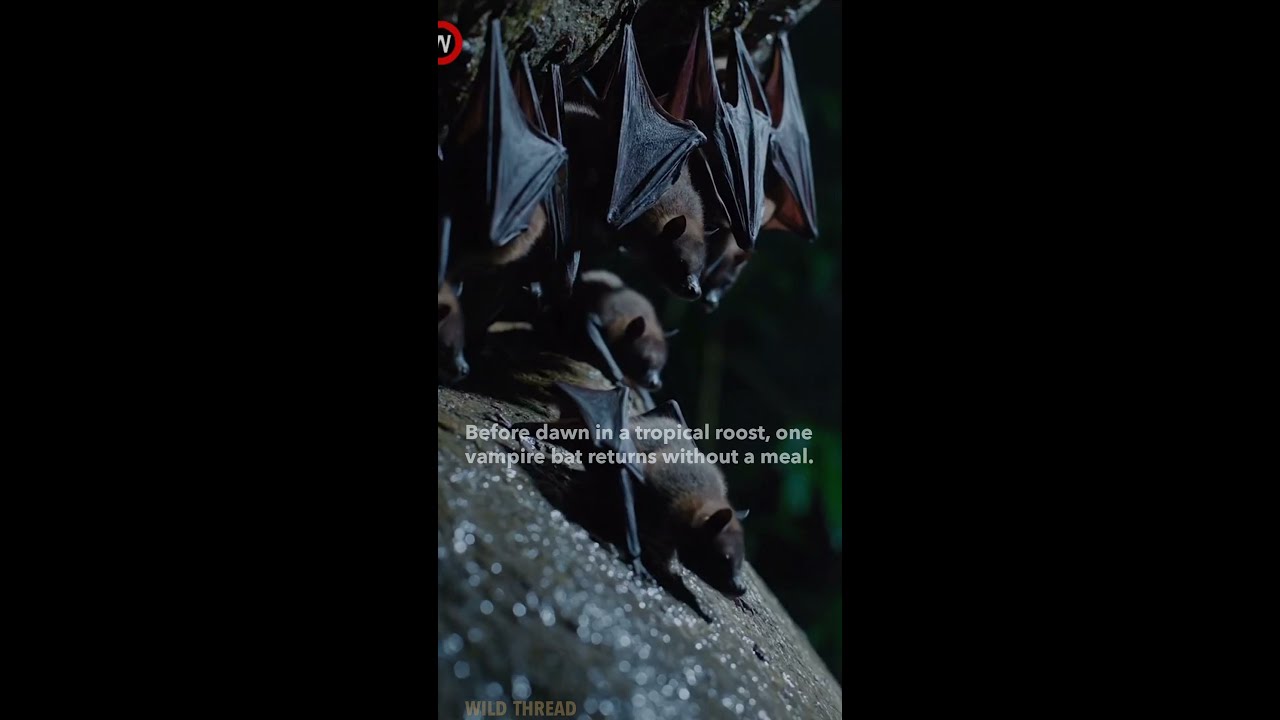
Before dawn in a tropical roost, one vampire bat returns without a meal. For this animal, hunger is not background discomfort.
Too many empty nights can kill. A night hunt is boom or bust: a full stomach, or almost nothing.
That fragile rhythm creates a strange kind of insurance inside the roost. The help is not random charity.
It follows relationships the bats remember. Often, the cheaper gift comes first: grooming, touch, and tolerance in the dark.
Researchers call this raising the stakes: trust begins small before it becomes costly. When the bond is strong enough, a fed bat can share a little meal from its own body.
The act looks intimate because it is: food passes mouth to mouth in darkness. In experiments, past food help predicted future donations more strongly than relatedness alone.
The cave is not a crowd. It is a memory network with wings.
The bat that gives tonight may be the hungry one tomorrow. This is not softness replacing survival.
It is survival learning to use relationship. Every shared meal carries cost, memory, and a quiet bet on future return.
The hidden thread is this: sometimes the body survives because the bond remembers.
The Signal Brief
One sourced idea worth your attention, in your inbox. No noise.