Why tigers disappear in plain orange
A tiger should be easy to see: orange body, black stripes, white flashes. But that color is not meant for human eyes. It is aimed at deer, boar, and forest light. Many hoofed prey have limited red-green vision. Orange collapses toward dull vegetation, while the stripes split one animal into reeds, trunks, and broken shadows. The trick is not invisibility. It is delay. A tiger crouches low, waits inside patches of sun and shade, then lets the forest finish the disguise before speed begins. That i
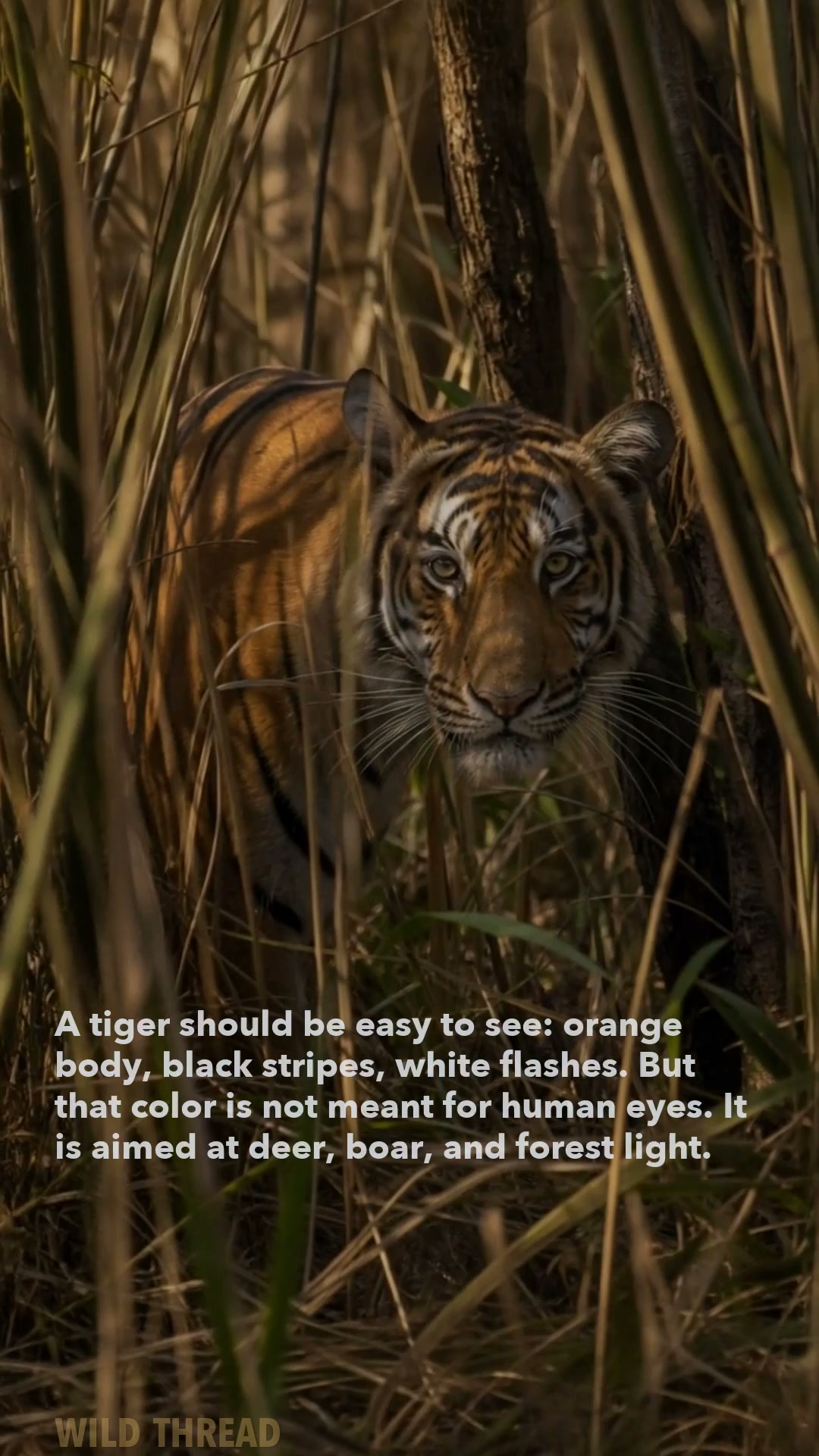
A tiger should be easy to see: orange body, black stripes, white flashes. But that color is not meant for human eyes. It is aimed at deer, boar, and forest light.
Many hoofed prey have limited red-green vision. Orange collapses toward dull vegetation, while the stripes split one animal into reeds, trunks, and broken shadows.
The trick is not invisibility. It is delay. A tiger crouches low, waits inside patches of sun and shade, then lets the forest finish the disguise before speed begins.
That is why the animal feels almost impossible. Nature did not hide the tiger by making it plain. It hid the tiger by designing beauty for the wrong eyes.
Key facts
- Many tiger prey mammals have limited red-green color discrimination compared with humans.
- Tiger stripes break the animal's outline in forests, grasses, and broken light.
- Camouflage can work by delaying detection long enough for a predator to close distance.
- The tiger's orange can appear much less conspicuous to common prey than it appears to human viewers.
- A tiger's camouflage depends on body posture and slow movement as much as fur color.
Why it matters
The tiger shows that natural beauty can be tuned to the perception of another species, not to ours.
The Signal Brief
One sourced idea worth your attention, in your inbox. No noise.