Why Fire Ants Build a Living Raft
Flooded fire ant colonies link bodies into a buoyant, water-repellent raft that can keep the colony alive.
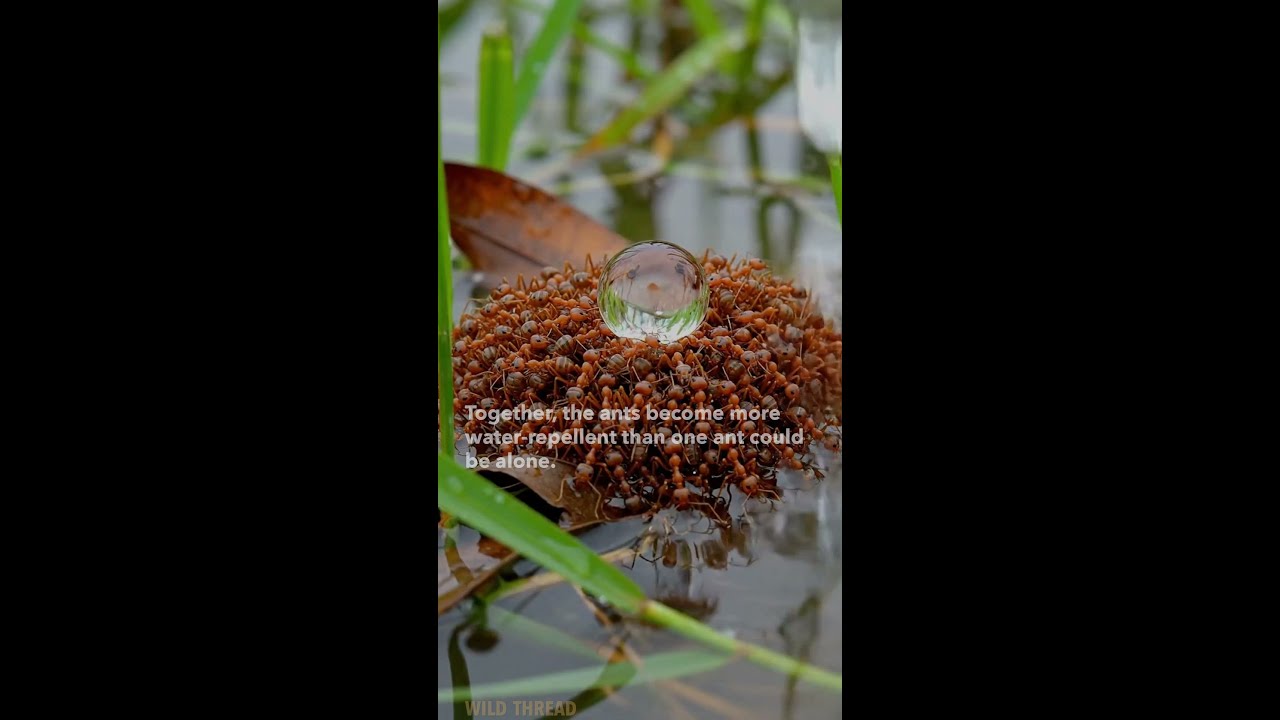
When floodwater enters a fire ant nest, the colony cannot outrun the water alone. The first rule is simple: do not scatter.
Touch another body. Within minutes, separate insects begin behaving like one living material.
They hold with claws, foot pads, and mandibles, making thousands of small attachments. The colony flattens into a raft, with wet ants below and drier ants above.
The secret is not only gripping. Their bodies trap air between water and shell.
Together, the ants become more water-repellent than one ant could be alone. Even ants at the bottom can stay alive because the trapped air keeps water out.
Inside the raft, the colony protects what matters most: the queen and the brood. There is no architect above them.
The structure emerges from local rules. A rigid raft would break.
This one bends, tightens, and keeps floating. One ant struggles in water.
Thousands together become a surface. The raft can last long enough for the flood to move the colony somewhere new.
When the raft touches land, the living structure can dissolve back into a colony. The hidden thread is this: survival can appear when many small bodies become one system.
The Signal Brief
One sourced idea worth your attention, in your inbox. No noise.