Why Crows Remember the Face of Danger
Crows can recognize individual human faces associated with threat and carry that memory through flock behavior over time.
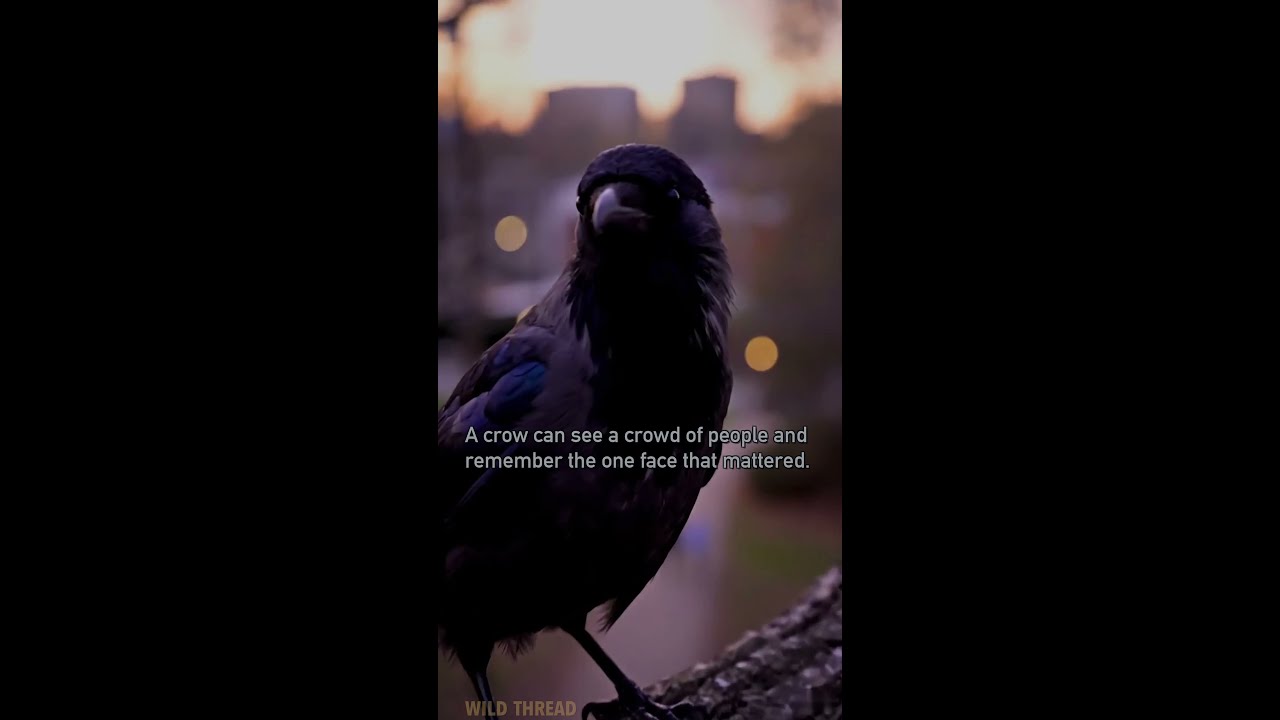
A crow can see a crowd of people and remember the one face that mattered. Not a shape, not a coat, not a passing smell.
A face. In experiments, a mask linked to danger changed the way crows behaved years later.
They scolded, gathered, watched, and warned as if the past had landed again. The memory did not stay locked inside one bird.
Other crows learned where attention should turn. A face became a signal moving through the flock.
That is why a city crow can seem almost personal in its judgment. It is not magic, and it is not a grudge in the human sense.
It is survival tied to recognition, fear, teaching, and place. The street becomes a map of who is safe and who is not.
The bird's eye is small, but the social memory behind it is wide. To live near humans, crows had to learn the difference between many of us.
They did not become clever for entertainment. They became clever because memory has edges.
The hidden thread is this: intelligence begins when the world stops being anonymous.
Sources
The Signal Brief
One sourced idea worth your attention, in your inbox. No noise.