Why an octopus mother stops eating
A restrained Wild Thread short about a brooding octopus mother whose appetite, intelligence, and body are redirected into guarding eggs, revealing maternal care as an evolutionary tradeoff.
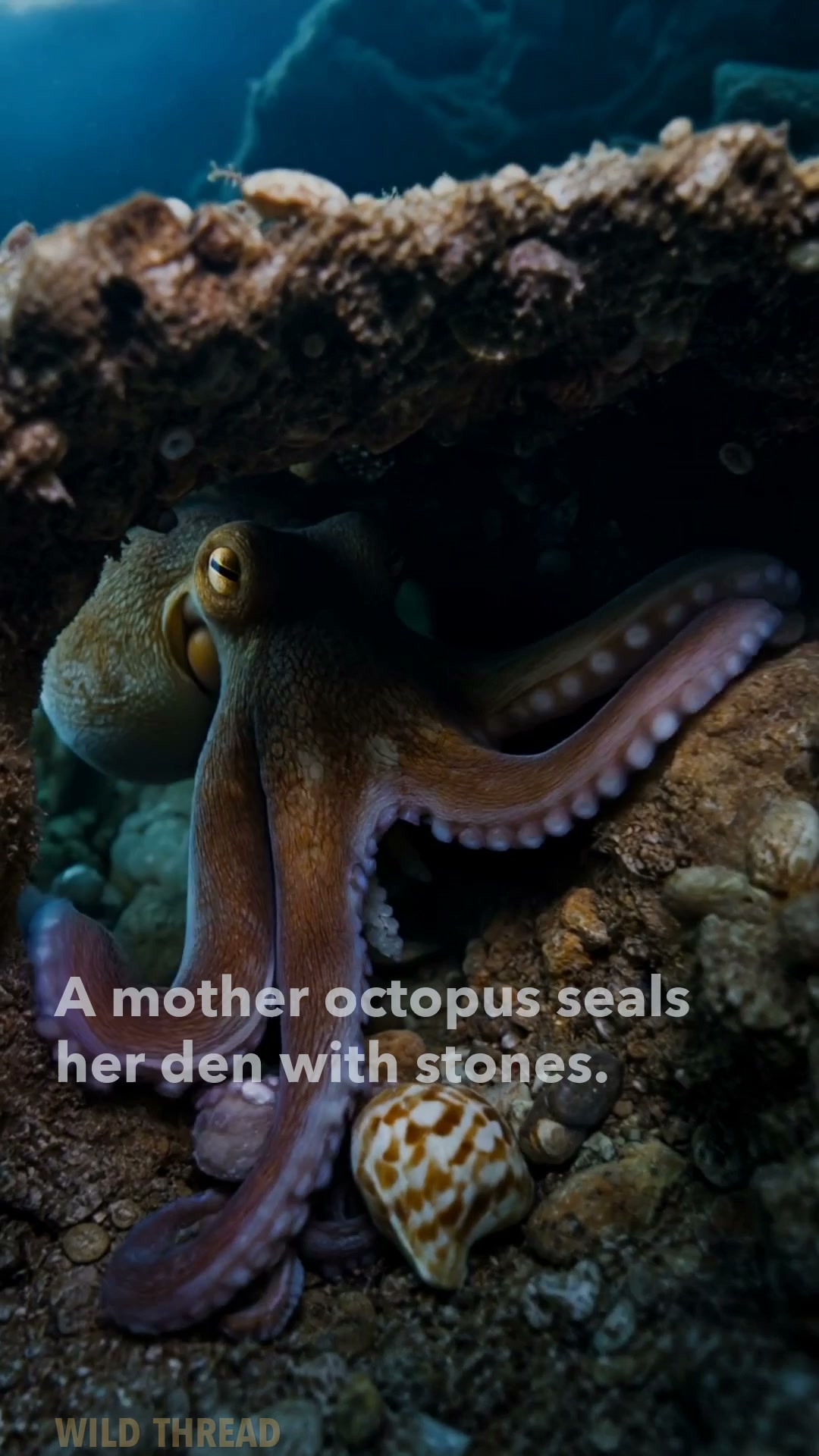
In blue dusk, a mother octopus seals her den with stones, then settles over pearl-like eggs. The reef keeps moving outside; she does not follow it anymore. Inside, water trembles softly.
Her body has entered its final contract. Optic glands behind the eyes shift her into brooding and fasting after reproduction. Appetite becomes vigilance, and swift decline begins hour by hour.
The mind that opened shells, changed color, and read currents narrows to one task. She patiently washes oxygen through the eggs, keeping the den clean for beginnings against silt and time.
This is not tragedy, and not romance. It is an evolutionary trade: a brief brilliant life spending its last order on lives it will never meet. The future is guarded by a vanishing body.
Key facts
- Female octopuses brood eggs, fast, and undergo rapid physiological decline after reproduction.
- The optic gland is a key neuroendocrine center involved in this life-history transition.
- The emotional turn is maternal investment as an evolutionary tradeoff.
- Some lives are built to spend themselves on the next life.
Why it matters
This topic satisfies Wild Thread's high-YTS filters: recognizable behavior, hidden mechanism, real-camera visual potential, and a quiet final truth about life.
The Signal Brief
One sourced idea worth your attention, in your inbox. No noise.