The Hidden Adaptation Behind Underwater Thunder
How can a shrimp punch water? A pistol shrimp snaps one huge claw, and a nearby fish jolts sideways without being touched. This tiny hunter is not pinching prey.
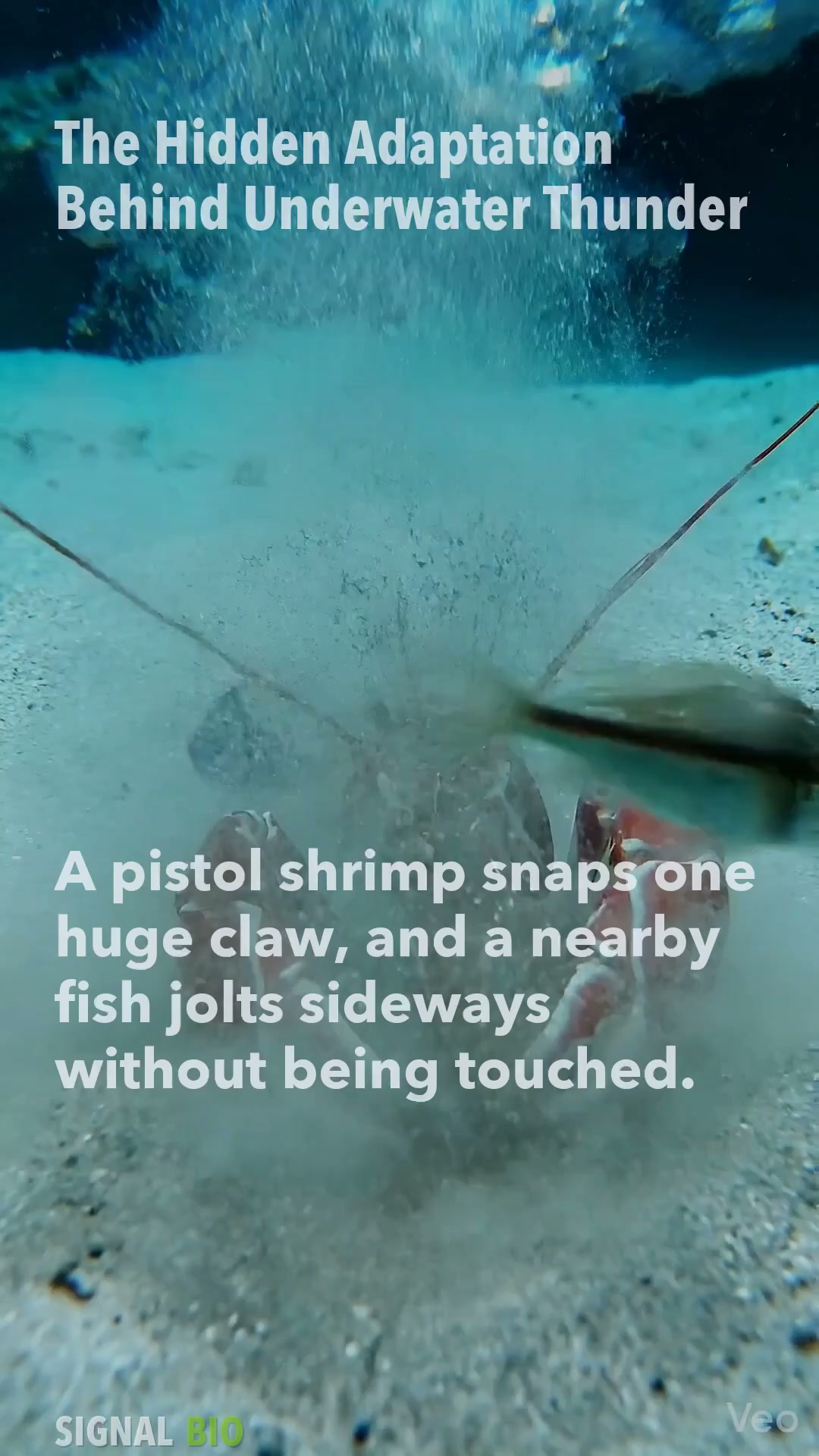
How can a shrimp punch water? A pistol shrimp snaps one huge claw, and a nearby fish jolts sideways without being touched. This tiny hunter is not pinching prey. It is firing physics through the reef.
That matters because reef prey vanishes fast. A shrimp cannot outrun a fish into rock cracks, so it needs reach beyond its body. The claw is shaped less like a hand and more like a trigger.
When the claw slams shut at about sixty miles an hour, it shoots a tight water jet and drops pressure at the tip. Water flashes into vapor. That bubble is the real projectile, not the claw itself.
Then the bubble collapses violently. The implosion sends a shock through the water, spikes heat, and even makes a tiny flash of light that can stun prey. Underwater thunder is not muscle. It is water briefly failing.
Key facts
- A 12-scene natural-history explainer following the pistol shrimp from invisible strike to hidden mechanism.
- Showing how a tiny reef hunter uses cavitation.
- And a brief flash of light to stun prey without touching it.
- And why that changes how we understand both the animal and the physics of water.
- At the mouth of a burrow.
Why it matters
A pistol shrimp snaps one oversized claw. And a nearby fish jerks sideways as if punched by empty water.
The Signal Brief
One sourced idea worth your attention, in your inbox. No noise.