The Hidden Adaptation Behind Sperm Whale Sonar
What hunts blind and still wins? The sperm whale. It dives past usable light, into black water where eyes stop helping, yet it still tracks fast squid.
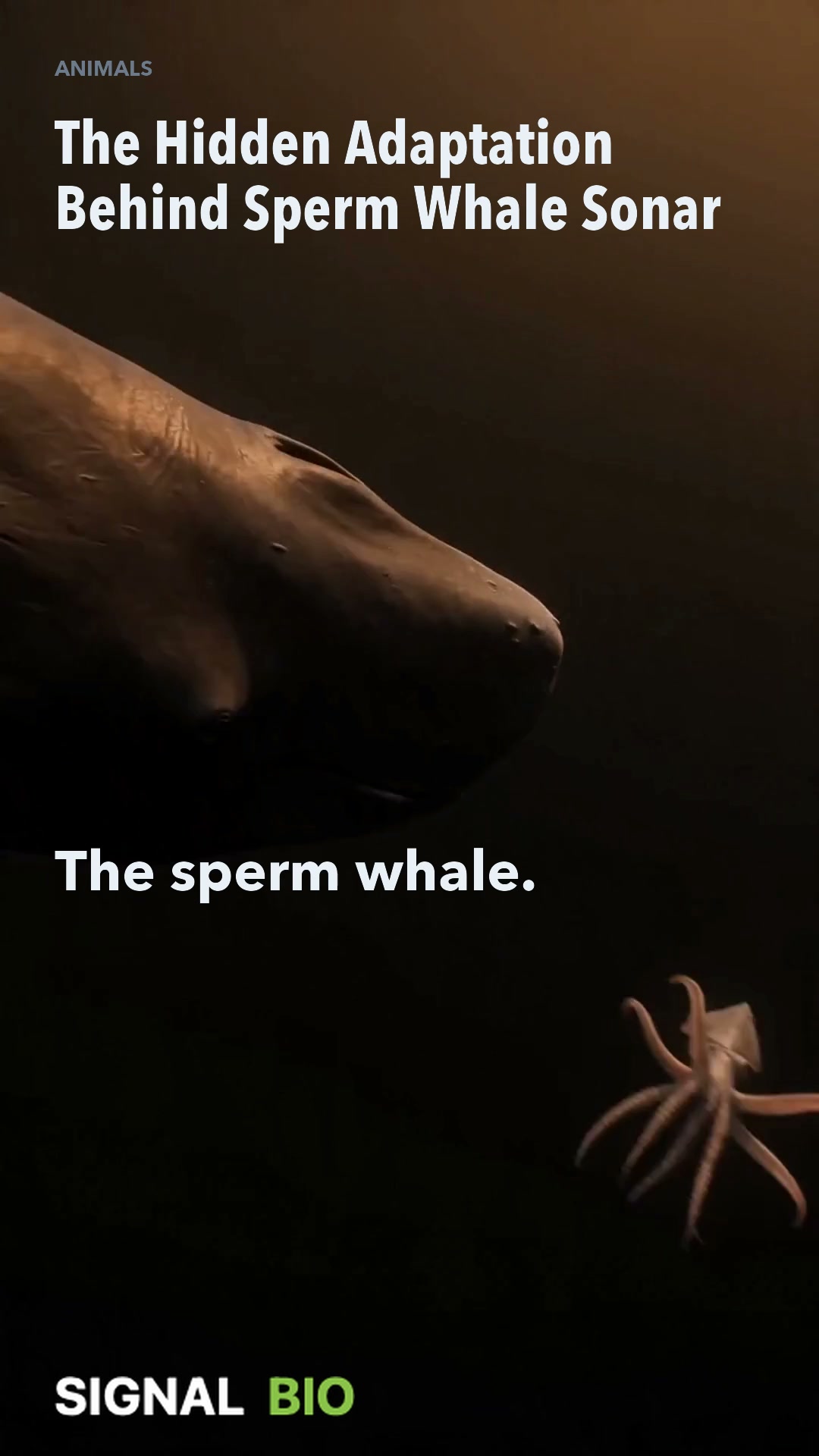
What hunts blind and still wins? The sperm whale. It dives past usable light, into black water where eyes stop helping, yet it still tracks fast squid. Its secret is not better vision. It is sonar.
That matters because the deep sea punishes hesitation. It is cold, pressurized, and empty-looking. Prey appears briefly, then vanishes. So the whale sends out explosive clicks and listens for returning echoes, building a target from sound instead of sight.
The trick is where those clicks are made and shaped. They start in the nasal passages, then pass through the huge oil-filled spermaceti organ, bounce off the dense rear skull, and travel forward again as a tighter, stronger beam.
When that beam hits a squid, the echo comes back carrying distance, direction, and movement. So the whale is not simply loud. It is precise. In darkness, its head works less like a battering ram and more like a living sonar lens.
Key facts
- A sperm whale drops into dim blue water and keeps going.
- Past the last useful light.
- Into a place where eyes no longer lead the hunt.
- Yet here, in the deep, it can still find fast-moving squid.
- The puzzle is simple: how does an animal chase prey in near total darkness?
Why it matters
The answer is not sharper sight, but sound. Sperm whales produce clicks so powerful they are considered the loudest biological sounds on Earth.
The Signal Brief
One sourced idea worth your attention, in your inbox. No noise.