The Hidden Adaptation Behind Cephalopod Optics
Wait, octopus skin can think? Not exactly. But when an octopus vanishes against rock, the real trick is stranger: it is not choosing a color chart.
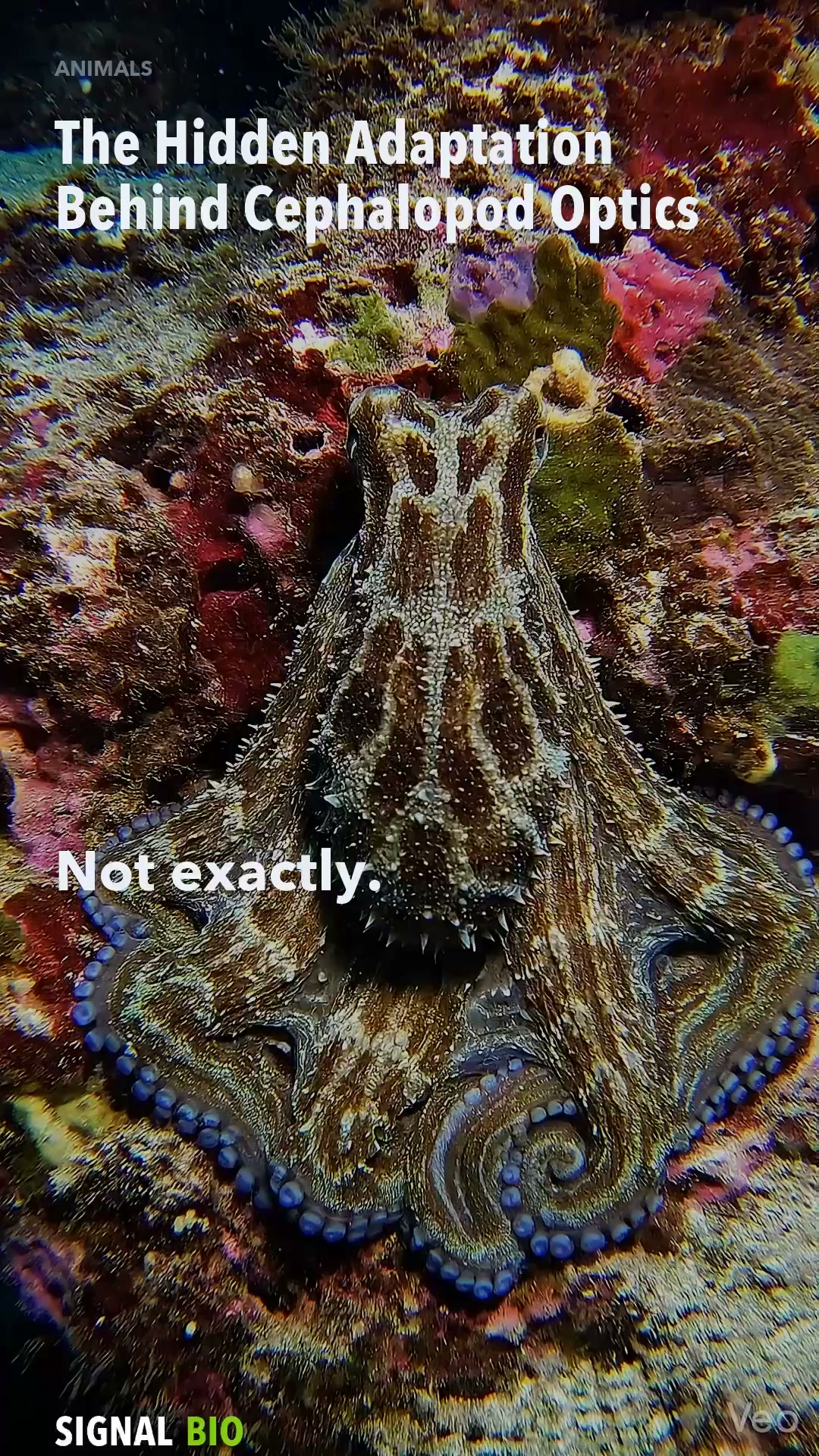
Wait, octopus skin can think? Not exactly. But when an octopus vanishes against rock, the real trick is stranger: it is not choosing a color chart. It is solving a camouflage problem in real time.
Its skin is packed with tiny living pixels. Some are chromatophores, little pigment sacs stretched open by muscles. Others are iridophores, reflective cells that bounce light. Together, they build shifting color, brightness, and shimmer almost instantly.
Here is the wild part: an octopus does not think, make me brown. Its nervous system reads the surroundings, then sends signals that pull those pigment sacs wide or relax them shut while reflective layers tune the light.
That is why camouflage is only half the story. This skin helps a hunter ambush prey while hiding from predators. The payoff is simple and weird: an octopus is not wearing a disguise. It is briefly becoming its environment.
Key facts
- Clear educational path from cellular mechanics to high-level predator-prey dynamics.
- Deep dive into the biological pixels of octopuses and cuttlefish.
- Exploring how the nervous system controls chromatophores and iridophores for instant camouflage.
- Extremely high informational interest (14M+ views on Real Science).
- An octopus doesn't think about its color.
Why it matters
It thinks about its surroundings. And its skin follows.
The Signal Brief
One sourced idea worth your attention, in your inbox. No noise.