The Hidden Adaptation Behind Biological Batteries
Wait, a fish becomes lightning? An electric eel slides through muddy Amazon water, and a small fish suddenly locks up. That is the puzzle.
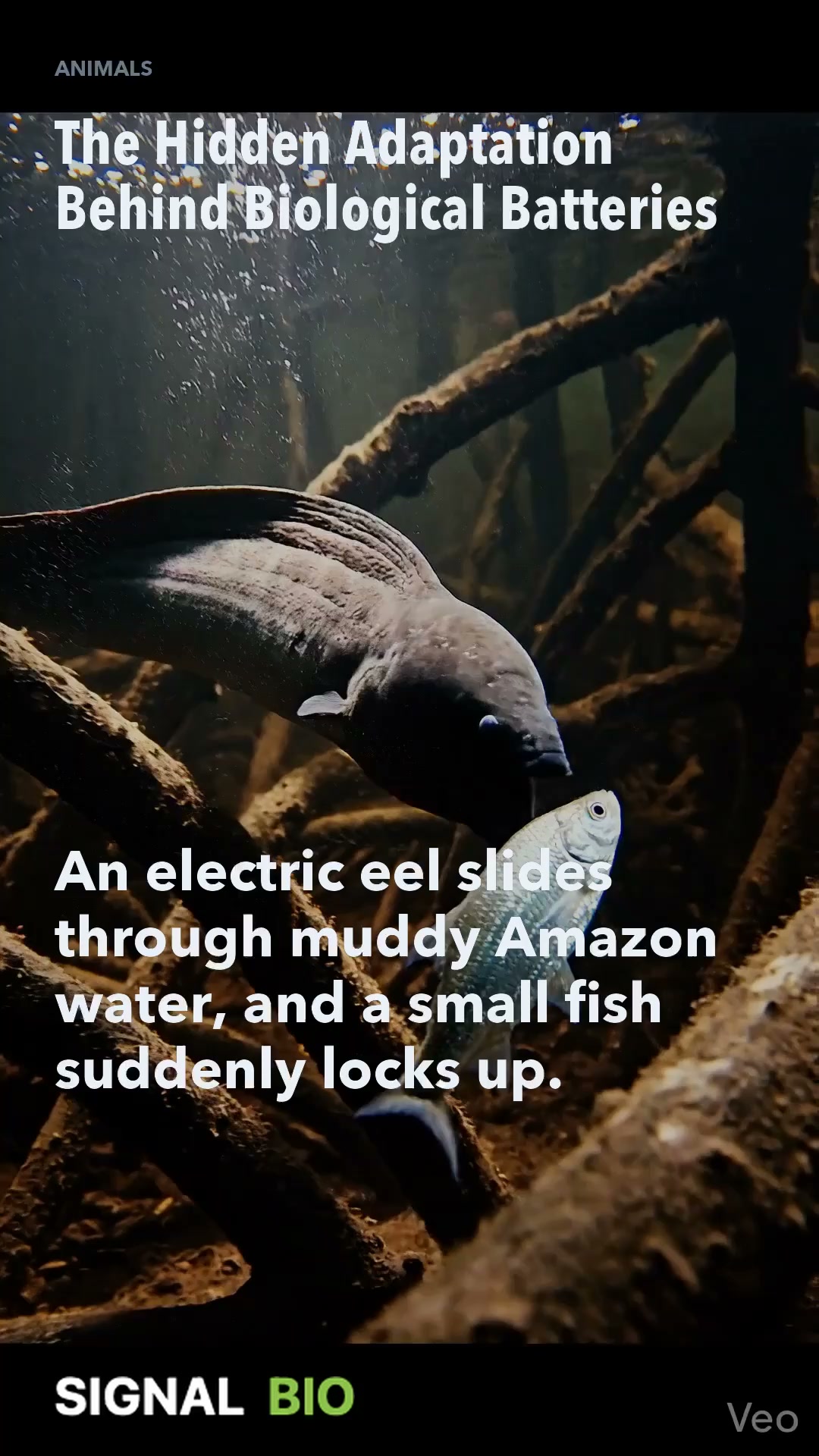
Wait, a fish becomes lightning? An electric eel slides through muddy Amazon water, and a small fish suddenly locks up. That is the puzzle. This predator does not just shock. Much of its body became a weapon.
In dark, root-choked water, chasing is clumsy. Instant control matters more than speed. So the eel gives up ordinary fish design. Much of its long frame is not built for fast swimming, but for making electricity on demand.
Inside, thousands of electrocytes, which are altered muscle cells, sit in neat stacks. Each one holds only a tiny charge. But when the brain fires them together, those little voltages add up like batteries in series.
Water carries that pulse into nearby prey, scrambling nerves and muscles almost instantly. The tradeoff is expensive: constant energy and less muscle for speed. So an electric eel is not just a shocking fish. It is a body reorganized around electricity.
Key facts
- An electric eel is not simply a fish that shocks.
- It is a long Amazon predator whose body has been reorganized into a living battery pack.
- With thousands of modified muscle cells storing tiny electrical differences until the brain orders them to fire together.
- This episode follows that chain from a prey-stopping pulse in muddy water to the cellular mechanics.
- And tradeoff that make electricity this animal’s main weapon.
Why it matters
In the brown water of the Amazon, an electric eel barely seems to hurry. Then a small fish ahead of it goes rigid.
The Signal Brief
One sourced idea worth your attention, in your inbox. No noise.