How AI Decoded the Sperm Whale Alphabet
For decades, marine biologists listened to the rhythmic clicks of sperm whales, known as codas, assuming they were simple identification signals. The ocean was filled with these dense, cracking sounds, but the underlying structure remained a complete mystery to human ears. That changed when an interdisciplinary team fed thousands of recorded whale codas into sophisticated machine learning algorithms.
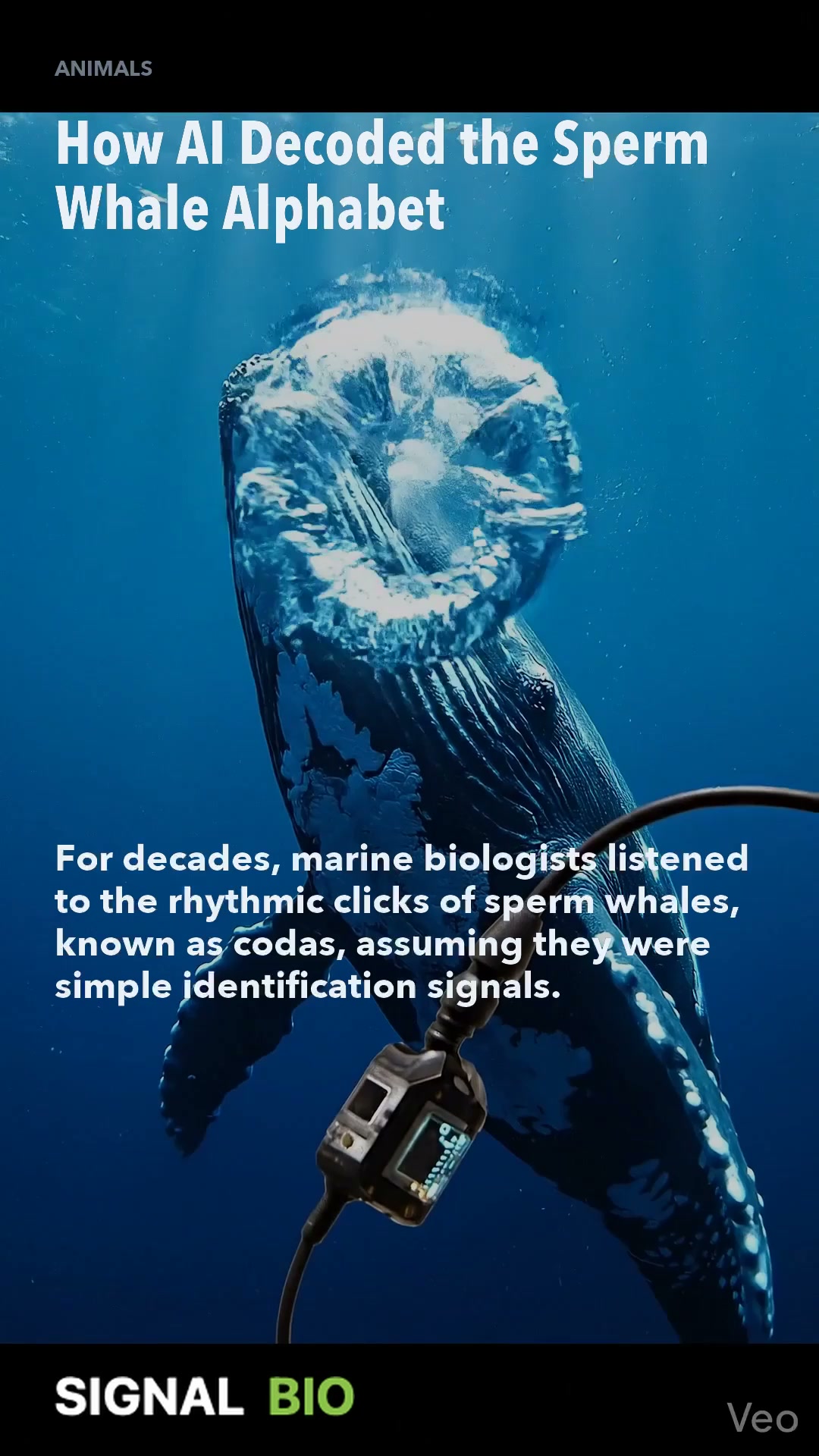
For decades, marine biologists listened to the rhythmic clicks of sperm whales, known as codas, assuming they were simple identification signals. The ocean was filled with these dense, cracking sounds, but the underlying structure remained a complete mystery to human ears.
That changed when an interdisciplinary team fed thousands of recorded whale codas into sophisticated machine learning algorithms. The AI didn't just find random noise; it discovered a highly structured matrix. It mapped changes in tempo and rhythm that whales combined in predictable, conversational sequences.
The breakthrough revealed what scientists now call a 'sperm whale phonetic alphabet.' The whales were actively modifying the duration and pitch of their clicks, adding subtle communicative nuances and combining basic elements to build a vast, previously invisible vocabulary.
This means the largest predators on Earth aren't just making sounds—they are speaking a complex, highly evolved language. The ability to isolate these sonic building blocks proves we are no longer searching for intelligent communication in deep space; it is echoing right below us.
Key facts
- Sperm whales communicate using complex sequences of clicks known as codas.
- Machine learning algorithms successfully identified structured phonetic elements within whale codas.
- The discovered structure functions as a phonetic alphabet, allowing whales to build large, combinatory vocabularies.
- The whales can modify the tempo and rhythm of their codas mid-conversation, much like human vocal inflection.
- The structural complexity of sperm whale communication rivals human language in terms of combining discrete sounds.
Why it matters
Decoding a complex non-human language paradigm forces us to redefine intelligence and our relationship with other apex species sharing our planet.
The Signal Brief
One sourced idea worth your attention, in your inbox. No noise.