Why Medusa's gaze is about being punished for what was done to you
Twist first: Medusa is not terrifying because she is evil. She is terrifying because the myth turns injury into guilt. Her gaze matters because it asks who gets called monstrous after violence, and why.
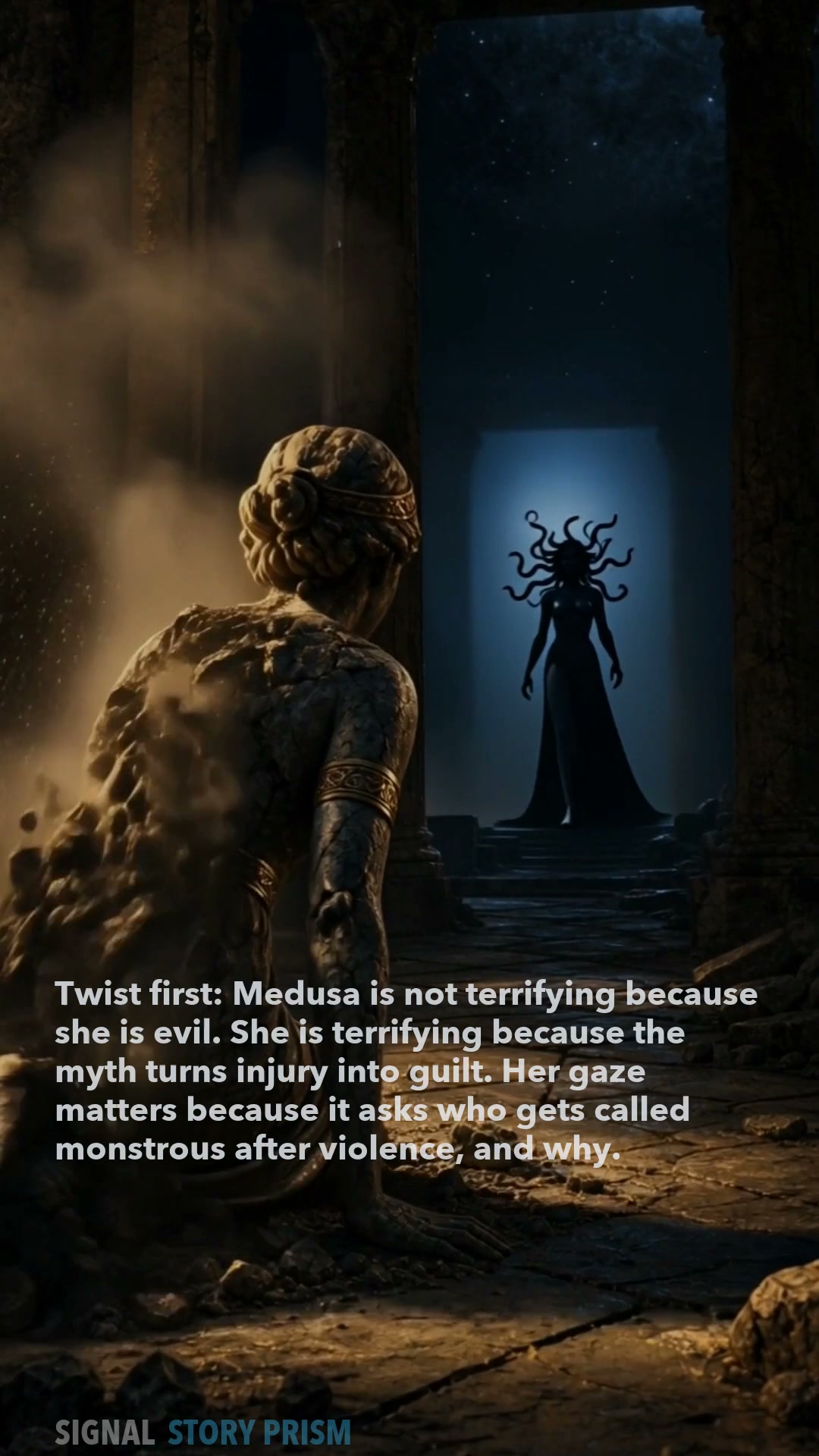
Twist first: Medusa is not terrifying because she is evil. She is terrifying because the myth turns injury into guilt. Her gaze matters because it asks who gets called monstrous after violence, and why.
The anchor is the petrifying gaze. It does not just kill. It freezes. That matters. Trauma often locks the body, voice, and social identity in place, while the story shifts blame onto the marked survivor.
Then the snakes sharpen the point. They make the wound visible. What should accuse the source of harm gets attached to her body instead. The legend protects power by making the aftermath look like her.
So Medusa still lands. The myth exposes a brutal pattern: people often punish the changed person, not the force that changed them. Once you see that, her face stops being a warning and becomes evidence.
The Signal Brief
One sourced idea worth your attention, in your inbox. No noise.