ドリアン・グレイが怖いのは、虚栄の物語だからではない
『ドリアン・グレイの肖像』を、虚栄ではなく「美が代償を失うときの罠」として読む、静かな四景の映像エッセイ。
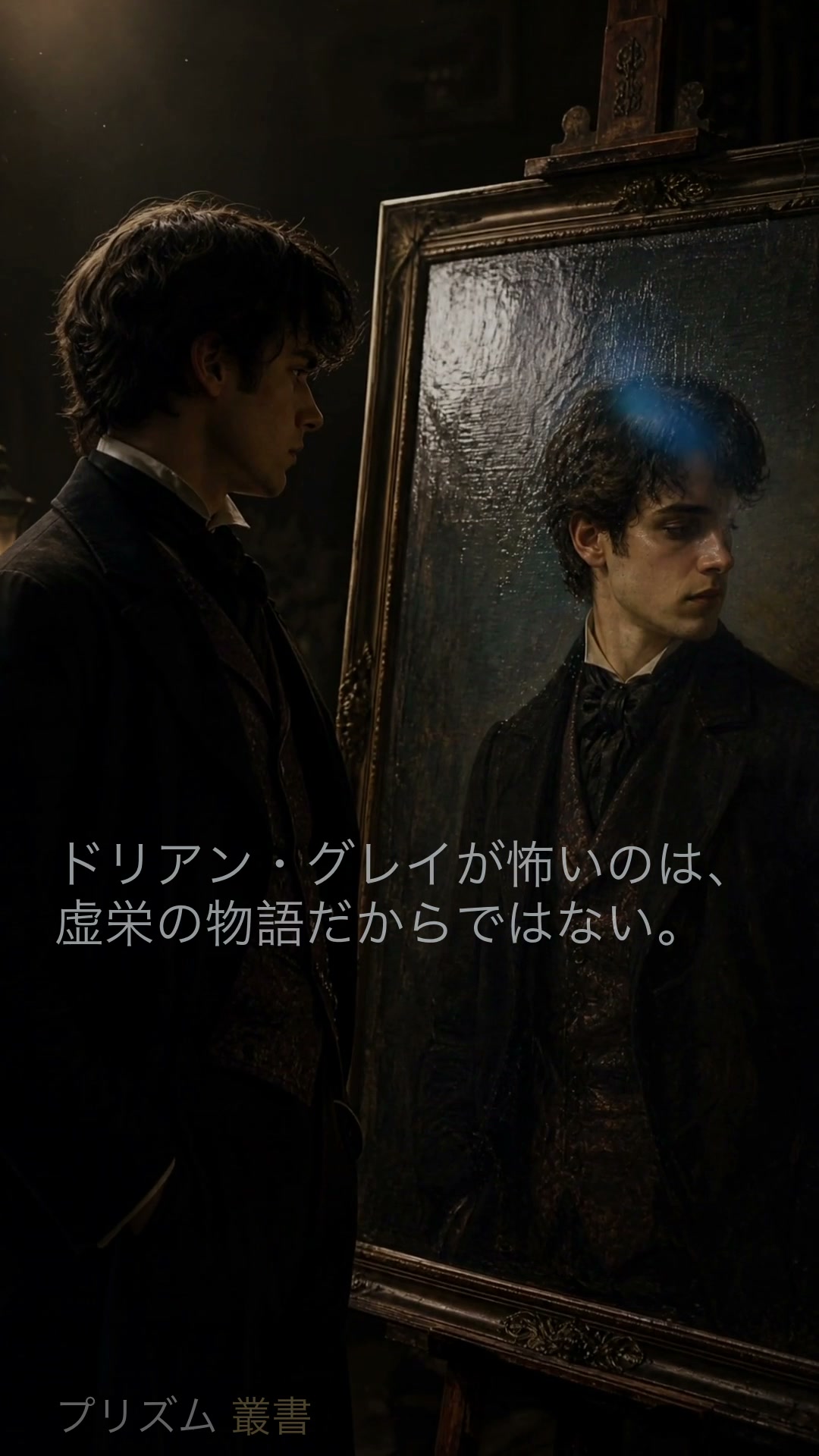
ドリアン・グレイが怖いのは、虚栄の物語だからではない。もし美しさだけが、何ひとつ償わなくてよいなら――その願いが、すでに罠だった。
願いは報いを消さない。ただ、見えない場所へ移す。屋根裏に隠された肖像だけが歳を取り、残酷さのたび、絵の顔に沈黙の傷が刻まれてゆく。
ここで美は自由ではなくなる。傷が肉体に届かない瞬間、顔と魂は別れ、無垢に見える者ほど、ほんとうの自分から遠く追放されてしまう。
だから彼が刃を向けたのは、絵ではなく、最後に残った真実だった。肖像が裂けたとき壊れたのは美貌ではない。代償から逃げた時間そのものだ。
Key facts
- Wait, Dorian Gray is not about vanity. It asks a nastier question. What if beauty never had to pay?
- Wait, Dorian Gray is not about vanity. It asks a nastier question. What if beauty never had to pay? He sees his portrait, wishes it would age instead, and his own face becomes perfect camouflage.
- But the wish does not erase consequence. It moves it. The portrait becomes his hidden moral body, locked away in the attic, and every cruelty etches the painted face while his skin stays smooth.
- That is the real trap. Once no scar reaches his body, appearance splits from identity. Beauty without consequence stops being freedom. It becomes exile from accountability, a life where the true self can rot unseen.
- So when he stabs the portrait, he attacks the only place truth still lives. The hidden face returns, and it destroys him. Wilde's warning feels modern: beauty becomes lethal the moment it stops answering for us.
Why it matters
Scene 1 of 4, opening hook and misconception beat in the full arc. Visualize the familiar vanity reading being overturned by the dangerous wish. Slow forward camera push through a Victorian studio toward a freshly painted portrait and an elegant AI-generated young man beside it, both faces identical, while a painter steps back into shadow. Warm gold studio light, restrained blue prism shimmer on wet oil paint, drifting dust, dark cinematic realism. Current beat: Dorian wishes the portrait would age instead of him, and beauty starts becoming a trap.
The Signal Brief
One sourced idea worth your attention, in your inbox. No noise.